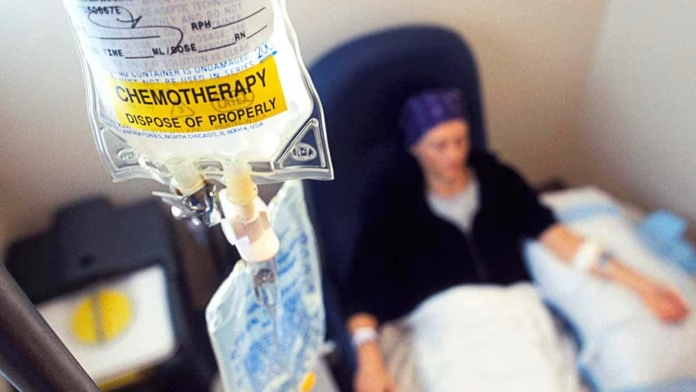


In a major regulatory intervention to avert a severe public healthcare crisis, India’s drug price regulator, the National Pharmaceutical Pricing Authority (NPPA), has approved a one-time 50% emergency hike in the ceiling prices of two vital chemotherapy drugs: Cisplatin and Carboplatin.
The decision, finalized during the NPPA’s 147th meeting, saw the regulator invoke its extraordinary powers under Para 19 of the Drugs (Prices Control) Order (DPCO), 2013. The move follows intense lobbying from the pharmaceutical industry and urgent alarms raised by premier oncology centers, including AIIMS Delhi and the Tata Memorial Centre, regarding severe, localized stockouts that were forcing dangerous therapy delays for thousands of patients.
The New Controlled Price Thresholds
As scheduled formulations under the National List of Essential Medicines (NLEM), the retail prices of these lifesaving chemotherapies have been tightly capped for over a decade. The new price caps aim to immediately balance patient affordability with industrial manufacturing viability:
| Formulation | Old Ceiling Price | New Revised Price (50% Hike) | Primary Therapeutic Use |
| Cisplatin (1 mg/ml Injection) | ₹7.26 per ml | ₹10.89 per ml | Ovarian, Lung, Head & Neck Cancers |
| Carboplatin (10 mg/ml Injection) | ₹60.49 per ml | ₹90.74 per ml | Breast, Cervical, Testicular Cancers |
Note: The NPPA stated that these revised price thresholds will remain under close monitoring and will be formally reviewed after six months.
Why the Shortage Occurred: The Raw Platinum Crisis
The nationwide scarcity was primarily driven by an unviable economic squeeze on domestic pharmaceutical manufacturers. Cisplatin and Carboplatin are platinum-based agents that rely heavily on raw platinum to manufacture their Active Pharmaceutical Ingredients (APIs).
Over the past year, the global cost of raw platinum surged dramatically:
- The Price Spike: Input costs jumped from roughly ₹2,000 per gram to nearly ₹5,000 per gram, representing an absolute 150% baseline cost expansion.
- Supply Chain Disruptions: The surge was heavily aggravated by severe mining deficits in South Africa and ongoing maritime blockades in West Asia shipping corridors, which restricted raw material exports from the UAE—India’s largest supplier of raw platinum.
Trapped under rigid domestic price ceilings that only allowed for marginal annual increases tied to the Wholesale Price Index (WPI), major Indian oncology manufacturers scaling back or completely halting production lines to avoid devastating financial losses.
Impact on Healthcare and Patients
Oncologists classify Carboplatin and Cisplatin as the absolute “backbone” of first-line, standard curative regimens for solid tumors. Because there are no exact generic or medical substitutes for these specific platinum-based agents, the production halts left patients scrambling across wholesale markets, increasing the risk of suboptimal drug substitutions or black-market price gouging.
“While maintaining affordability for the public remains a cornerstone of our policy, patient access to life-saving medicines cannot be jeopardized by making basic production entirely unviable for domestic lines,” the NPPA noted in its official directive.
Beyond Cancer: Vaccine Price Revisions
The Department of Pharmaceuticals (DoP) revealed that out of 82 emergency applications submitted by the industry seeking upward cost relief, the inter-ministerial panel approved only four critical public health formulations.
Alongside the two cancer drugs, the government approved a similar 50% upward revision for Anti-Tetanus Immunoglobulin (ATIG) injections (250 IU and 500 IU variants) and cleared targeted price restructuring for critical childhood immunizations, including the BCG, Measles, and Measles-Rubella (MR) vaccines, to guarantee uninterrupted supply loops across public health channels.