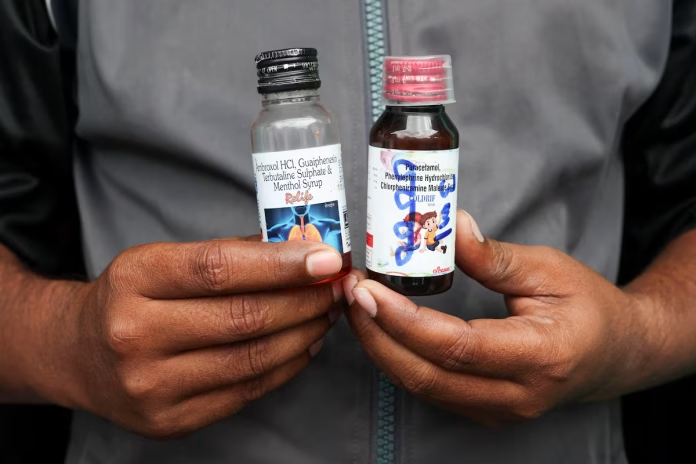


nion Health Ministry has officially ended the over-the-counter (OTC) sale of all syrup-based medicines, including cough syrups, across India.
The policy shift was finalized through the Drugs (Fifth Amendment) Rules, 2026, which were formally notified and brought into effect immediately. The sweeping change targets liquid oral medications following a series of local and international safety probes regarding contaminated pediatric cough syrups.
The Legal Mechanism: Amending Schedule K
To execute the restriction, the central government invoked its powers under the Drugs and Cosmetics Act to amend the long-standing Drugs Rules, 1945:
- Exemption Removal: The Ministry has permanently scrubbed the word “Syrups” from Entry 7 of Schedule K.
- The Structural Shift: Historically, Schedule K exempted a selective list of household remedies (like lozenges, aspirin, and cough tablets) from requiring a prescription to be sold by retailers. By removing syrups from this exempted list, the government has brought all liquid oral formulations under standard, strict pharmacy dispensing laws.
- The Prescription Mandate: Moving forward, pharmacies nationwide are legally barred from selling any cough syrup or medicinal syrup unless the consumer presents a valid prescription from a registered medical practitioner.
Why the Rules Were Tightened
The final notification follows a rigorous review process initiated by the Central Drugs Standard Control Organisation (CDSCO) and the Drugs Technical Advisory Board (DTAB). The regulatory crackdown was accelerated by severe domestic and global public health factors:
1. Contamination Incidents
The National Human Rights Commission (NHRC) and global bodies issued urgent alerts following the tragic deaths of children in states like Madhya Pradesh and Rajasthan. Investigations by the CDSCO revealed that multiple substandard batches of oral liquids contained lethal levels of Diethylene Glycol (DEG)—a toxic industrial solvent routinely used in antifreeze that causes rapid acute kidney failure when ingested.
2. Mandatory Finished-Product Testing
In tandem with the prescription mandate, the Indian Pharmacopoeia Commission (IPC) has revised national testing protocols. Manufacturers are now legally required to test for DEG and Ethylene Glycol (EG) at the finished product stage right before market release, supplementing existing raw material screening.
3. Strict Age Restrictions
The government’s updated medical advisories have severely narrowed the usage scope for young children. Under the current National Formulary of India (NFI) guidelines, doctors and pharmacists are instructed that cough and cold medications should not be prescribed or dispensed to children under the age of two, and are generally discouraged for children under five unless a clear, closely monitored clinical need exists.
While solid alternatives like cough lozenges, pills, and tablets remain unimpacted under the old Schedule K rules, the elimination of OTC syrup access fundamentally shifts India’s pharmacy landscape. By enforcing a strict paper trail for every liquid bottle sold, health regulators are attempting to completely flush out counterfeit, unregulated, and dangerous formulations from the domestic supply chain.