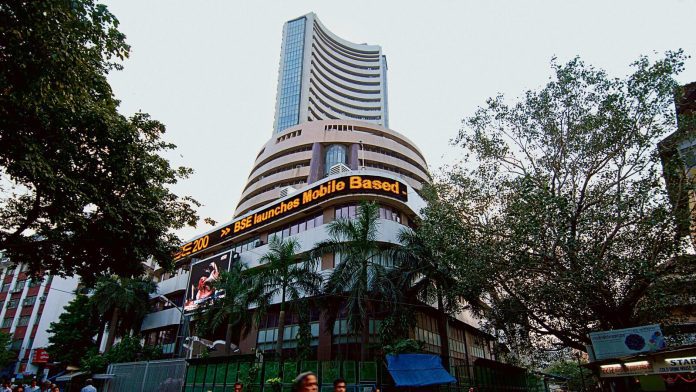


In a historic structural shift for Indian capital markets, no domestic company features among the top 10 constituents of the widely tracked MSCI Emerging Markets (EM) Index. The development marks the first time since at least 2000—a 26-year record—that India Inc. has been entirely locked out of the elite tier of the global investment benchmark.
India’s two largest index heavyweights, HDFC Bank and Reliance Industries Ltd (RIL), slipped to 11th and 12th positions respectively, down from the 7th and 8th spots they occupied as recently as March. Their individual weightings within the index have both dropped below 0.8%, pulling India’s overall allocation in the benchmark down to a six-year low of 10.87%.
The re-ranking highlights a massive, asymmetric shift in global capital deployment, driven by an unstoppable secular rally in hardware-centric artificial intelligence and semiconductor themes.
The Rise of the AI Super-Weights
The restructuring of the MSCI EM index is less a reflection of structural failure within India and more a testament to the sheer scale of the global AI boom. Institutional investors and passive exchange-traded funds (ETFs) have flooded billions of dollars into East Asian technology supply chains, vastly inflating the market capitalizations of chipmakers and tech hardware giants.
The current upper echelon of the MSCI EM Index highlights this extreme technology concentration:
- Taiwan Semiconductor Manufacturing Co. (TSMC): Retains the undisputed top spot, with its lone index weight soaring past 14.20%.
- South Korean Tech Leaders: SK Hynix (surging 194% from its previous cyclical peak) and Samsung Electronics (up 147%) have securely locked down the 2nd and 3rd positions.
- The Aggregate Picture: Together, TSMC, Samsung, and SK Hynix now command nearly 29% of the entire index, effectively turning the broad emerging markets benchmark into a highly concentrated technology vehicle.
As money manager allocations automatically adjust to track these soaring valuations, traditional non-tech sectors—such as Indian banking, domestic consumer energy, and legacy conglomerates—have seen their relative weight and influence naturally diluted.
Macro Headwinds: Oil Shocks and Domestic Outflows
The index-level rebalancing is occurring alongside a separate, macro-driven squeeze on India’s domestic financial markets. Net foreign institutional investor (FII) outflows have accelerated significantly, compounding the country’s index weight loss.
The core driver behind this investor caution is the prolonged geopolitical conflict in West Asia, which has kept global crude oil prices hovering around the $100-per-barrel mark.
As the world’s third-largest oil importer, India is acutely exposed to elevated energy costs. The price spike automatically inflates the country’s import bill, threatens to widen the current account deficit, and compresses margins across corporate sectors. The resulting market volatility has spooked both foreign and domestic retail investors. Data from the Association of Mutual Funds in India (AMFI) revealed that equity mutual fund inflows fell a sharp 40% month-on-month to ₹229.08 billion ($2.4 billion)—the lowest monthly intake in over a year.
Defensive Policy Interventions: Protecting the Capital Account
To ease pressure on its foreign exchange reserves and protect the rupee from widening capital account gaps, the Indian government has initiated a series of aggressive defensive and structural interventions:
- Drastic Tariff Hikes: The government raised import tariffs on gold and silver to 15% (up from 6%) to artificially suppress non-essential, high-value imports that deplete dollar reserves.
- Tax Exemptions for Foreign Capital: To counter the equity outflows, the government passed an ordinance exempting foreign portfolio investors (FPIs) from income tax on interest and capital gains derived from government securities.
- Expanding Green Bond Accessibility: The regulatory framework expanded permissible bond categories accessible to offshore funds, specifically fast-tracking new long-dated and green bond issuances.
These targeted reforms are strategically timed ahead of an imminent, high-stakes review by Bloomberg Index Services regarding India’s potential inclusion in its flagship Global Aggregate Index. While Bloomberg deferred India’s entry earlier in the year citing automated trading and tax settlement bottlenecks, resolving these issues could unlock an estimated $25 billion in passive bond inflows.
SEO & Market Implications: The Active Manager Paradigm
For asset managers and financial analysts, India’s retreat below the top-10 line triggers immediate mechanical adjustments.
Because the MSCI EM index serves as the operational baseline for funds managing over $700 billion in passive capital, scheduled quarterly rebalancing events will force algorithmic ETFs to reduce their physical allocations to Indian equities to mirror the new 10.87% benchmark constraint.
For active fund managers, the cost of underweighting India has dropped significantly. When a country holds a massive 20% weight, deviating from it represents an incredibly high-stakes, accountable bet. At an 11% weight, active managers can easily underallocate capital to India with minimal risk of performance divergence from the index, meaning Indian corporations will have to work substantially harder on valuation and margin performance to attract discretionary foreign capital through the remainder of the year.