
Zhipu AI release GLM-4.7, marking a significant upgrade to its large language model lineup and reinforcing China’s rapid progress in foundational AI technologies. The new model brings improvements in reasoning, coding, and multimodal understanding, positioning Zhipu AI as a serious competitor in the global AI race.
The development that Zhipu AI release GLM-4.7 highlights how Chinese AI firms are accelerating innovation despite global competition and regulatory challenges.
What Is GLM-4.7?
GLM-4.7 is the latest version of the General Language Model (GLM) series developed by Zhipu AI. The GLM family is designed as a general-purpose foundation model capable of handling complex language tasks, reasoning, code generation, and enterprise use cases.
With GLM-4.7, Zhipu AI has focused on boosting performance while improving efficiency and real-world usability.
Key Improvements in GLM-4.7
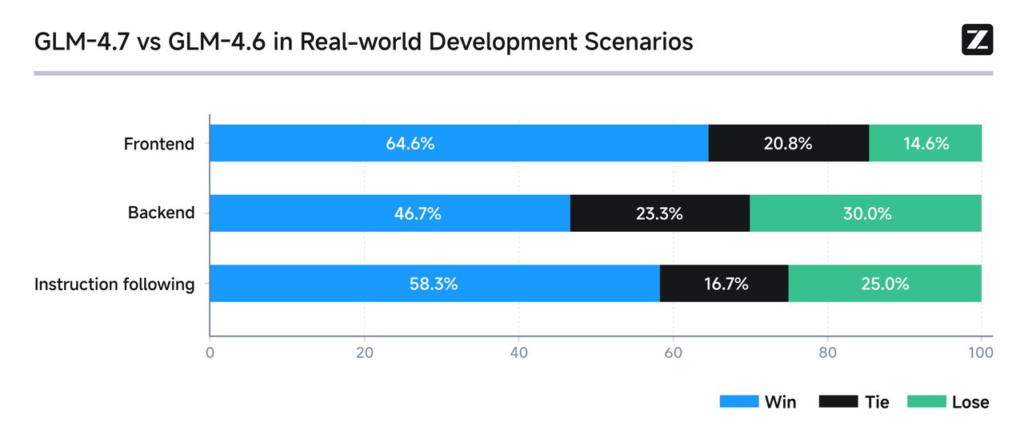
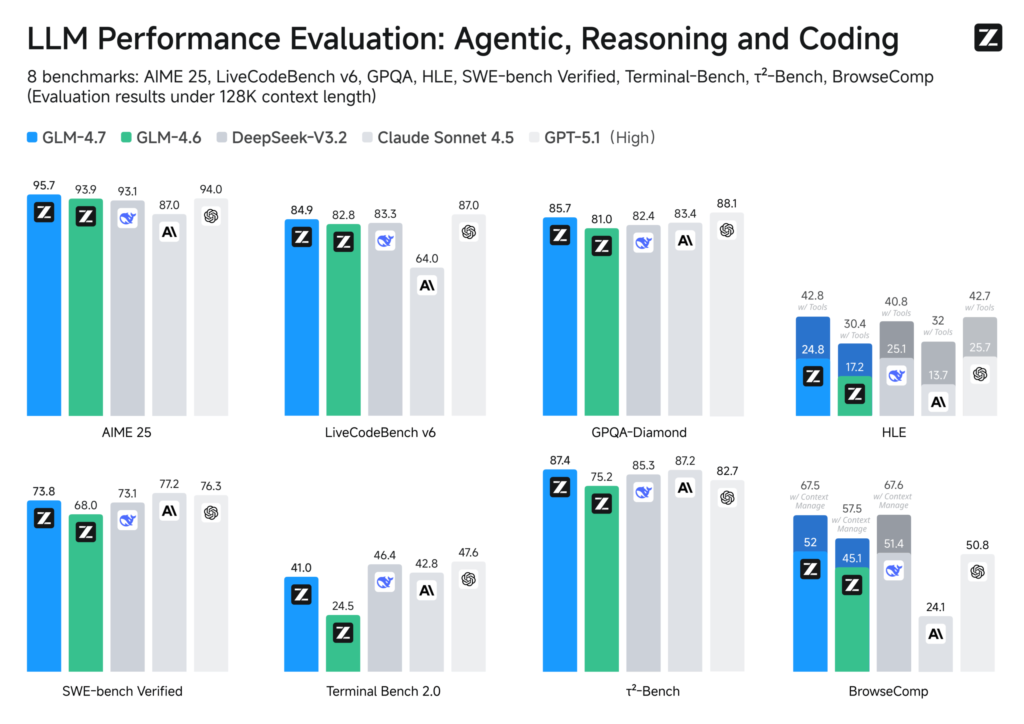
According to the company, GLM-4.7 delivers stronger logical reasoning, more accurate long-context understanding, and improved performance in coding and mathematical tasks. The model is also said to offer better alignment with user intent, making responses more precise and reliable.
As Zhipu AI release GLM-4.7, the upgrade reflects a broader industry trend toward models that prioritise reasoning quality over raw size.
Focus on Enterprise and Developer Use
GLM-4.7 is positioned not just as a consumer chatbot model but as an enterprise-ready AI system. It is expected to be used across applications such as customer service, software development, data analysis, and internal knowledge management.
Developers can integrate the model into business workflows, helping automate tasks and improve productivity at scale.
How GLM-4.7 Fits Into China’s AI Strategy
China has identified artificial intelligence as a strategic technology, and companies like Zhipu AI play a key role in building domestic alternatives to Western models. The fact that Zhipu AI release GLM-4.7 shows continued investment in homegrown foundation models that can support both commercial and national needs.
Analysts say such releases reduce reliance on foreign AI platforms while strengthening China’s AI ecosystem.
Competition With Global AI Models
GLM-4.7 enters a crowded global field dominated by US and European AI developers. While direct performance comparisons vary by benchmark, Chinese models are closing the gap rapidly in reasoning, multilingual capabilities, and task reliability.
As Zhipu AI release GLM-4.7, it adds pressure on global players to continue innovating at speed.
Safety, Alignment, and Responsible AI
Zhipu AI has stated that safety and alignment remain core priorities. The company claims GLM-4.7 includes improved safeguards against harmful content and misuse, along with better instruction following.
Responsible AI deployment is becoming increasingly important as models grow more capable and widely adopted.
What Comes Next for Zhipu AI
Following the release of GLM-4.7, Zhipu AI is expected to continue expanding its model ecosystem with more specialised tools, multimodal capabilities, and enterprise-focused solutions.
Industry observers believe future versions may further narrow the performance gap with leading global AI systems.
Conclusion
The announcement that Zhipu AI release GLM-4.7 marks another important milestone in the evolution of China’s large language models. With stronger reasoning, enterprise focus, and improved efficiency, GLM-4.7 demonstrates how quickly the AI landscape is evolving.
As competition intensifies worldwide, releases like GLM-4.7 show that the race for AI leadership is no longer confined to a single region—it is truly global.