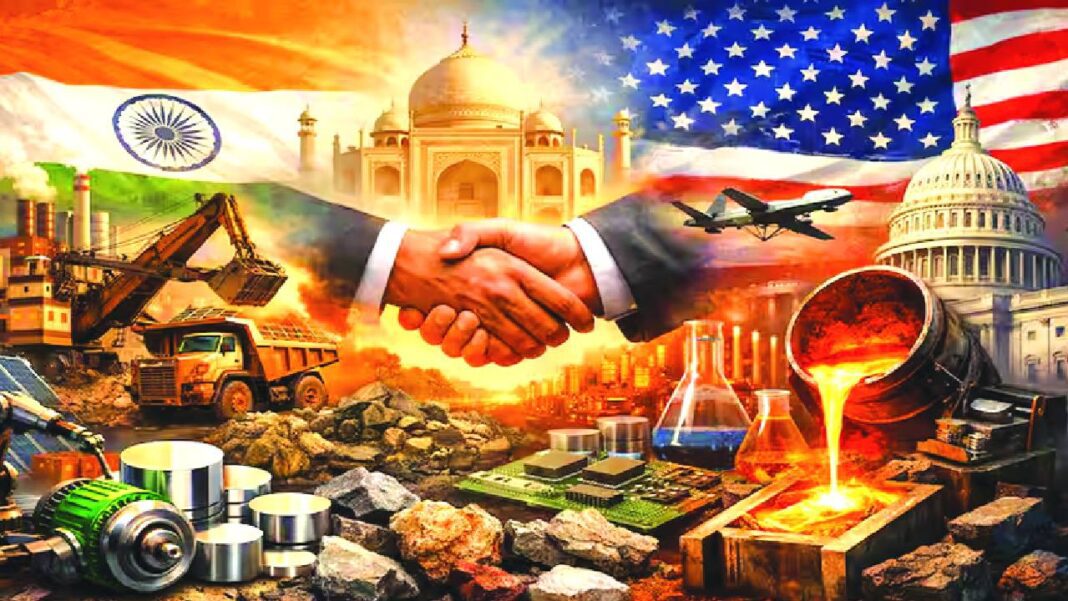

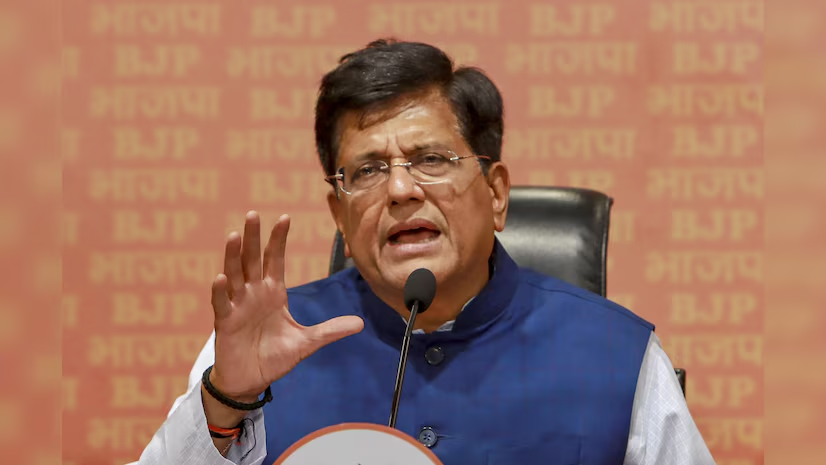
Union Commerce and Industry Minister Piyush Goyal officially assured the public that the landmark India-US Interim Trade Agreement has been structured to “ring-fence” and protect the interests of Indian farmers.
Speaking at a press conference in New Delhi, Goyal emphasized that India did not budge on its “red lines” regarding sensitive agricultural sectors, despite the broad scope of the deal aimed at reaching $500 billion in bilateral trade.
1. “Red Lines” and Protected Items
Goyal specified that several core agricultural and dairy products have been completely excluded from any tariff concessions to ensure domestic livelihoods are not threatened by cheaper imports.
- No Tariff Relief for US Exports: India has granted zero concessions on staples produced by local farmers, including:
- Grains: Wheat, rice, maize, soybean, and millets.
- Dairy: Milk, cheese, butter, and ghee.
- Others: Poultry, meat, sugar, ethanol (fuel), and tobacco.
- The GM Ban: The Minister categorically stated that no Genetically Modified (GM) products from the United States will be allowed to enter the Indian market under this deal.
2. Gains for Indian Agricultural Exports
While protecting domestic markets, the deal reportedly opens the door for Indian farmers to export their produce to the US with zero additional tariffs.
- Zero-Duty Access: Many Indian products that previously faced duties of up to 50% can now enter the US at 0% duty. These include:
- Beverages & Spices: Spices, tea, and coffee.
- Fruits & Vegetables: Mangoes, guavas, avocados, kiwis, papayas, pineapples, and mushrooms.
- Nuts & Oils: Cashew nuts, areca nuts, coconut and coconut oil.
3. The “18% Tariff” Strategic Edge
A major highlight of the deal is the reduction of the reciprocal tariff on general Indian exports to the US.
- The Cut: The effective tariff on Indian goods is dropping from a peak of roughly 50% (which included punitive duties related to Russian oil purchases) down to 18%.
- Competitive Advantage: Goyal pointed out that this 18% rate is lower than the tariffs faced by India’s regional competitors, such as China (30-35%), Vietnam (20%), and Bangladesh (20%), giving Indian exporters a significant edge.
4. Addressing Opposition and Concerns
The Minister’s statement aimed to counter criticism from opposition parties and farmers’ groups (like the ICCFM) who feared a “trap deal.”
- Response to Concerns: Goyal dismissed fears that India had “surrendered” its agriculture sector, calling the agreement a “Golden Letter” moment for India’s economic growth.
- Importing What We Lack: He clarified that India only reduced tariffs on items it either does not produce or produces in insufficient quantities, such as certain nuts (almonds, walnuts), specific spirits, and high-end medical/industrial inputs.
Conclusion: A “Balanced” Victory
Piyush Goyal’s central message is that the 2026 trade pact is “fair, equitable, and balanced.” By shielding sensitive staples like rice and dairy while securing zero-duty access for high-value exports like mangoes and spices, the government is betting that the deal will boost rural incomes without destabilizing domestic price structures.