
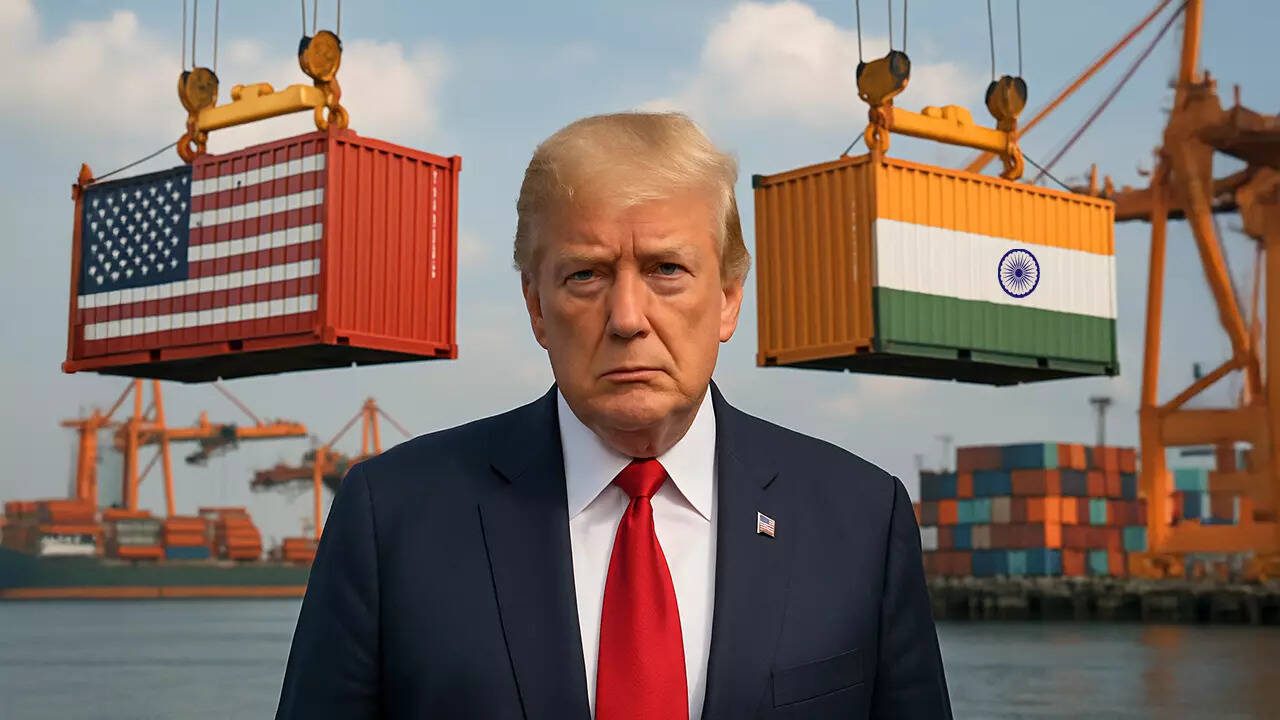
In a significant shift in trade dynamics, the US Treasury Department has indicated a potential rollback of the 25% additional tariff imposed on Indian goods.
This move follows claims from US Treasury Secretary Scott Bessent at the World Economic Forum in Davos (January 22–24, 2026) that the tariff policy has successfully pressured India to “stop” or significantly curtail its imports of Russian oil.
The Strategic De-escalation: Why Now?
The potential tariff cut is being framed as a victory for the Trump administration’s “America First” and sanctions-driven trade policy.
1. Claims of Policy Success
In interviews with Politico and Fox Business this week, Secretary Bessent asserted that India’s purchase of Russian crude by its refineries has “collapsed” following the implementation of punitive duties.
- The “Path to Removal”: Bessent stated, “I would imagine there is a path to take them off,” suggesting that the primary condition for the tariffs—deterring the funding of Russia’s war effort—has been met by New Delhi.
2. India’s Shift in Oil Sourcing
Reports from December 2025 and January 2026 indicate a sharp decline in Indian imports of Russian fossil fuels:
- Market Shift: Major refiners, including Reliance Industries, significantly cut Russian intake in late 2025, pivoting back toward West Asian (Middle East) and American suppliers.
- Rankings: India fell from the top spot to the third-largest buyer of Russian oil by late 2025, trailing behind China and Europe.
Context: The 50% Tariff Burden
The 25% tariff in question was actually part of a larger 50% total tariff burden placed on Indian goods in August 2025:
| Component | Rate | Reasoning |
| Base Reciprocal Tariff | 25% | Countering India’s “highest tariffs” on US goods. |
| Russian Oil Surcharge | 25% | Punitive measure for energy ties with Moscow. |
| Total Cumulative | 50% | Effective on textiles, gems, leather, and autos. |
The “500% Tariff” Overhang
While the 25% surcharge may be rolled back, a new threat remains on the horizon.
- The Graham Bill: US Senator Lindsey Graham has proposed a “Russia Sanctions Bill” that would allow for tariffs of up to 500% on any country (specifically targeting China and India) that buys and resells Russian oil.
- Bessent’s Stance: While the Treasury Secretary acknowledged the bill has “near-unanimous” support in the Senate, he maintained that the President already has the necessary authority under the International Emergency Economic Powers Act (IEEPA) to adjust tariffs as needed.
Conclusion: A Thaw in Trade Relations?
The signals from Washington suggest a cautious “thaw” in what had become an increasingly hostile trade relationship. However, Indian officials maintain that their energy policy remains guided by national security and market dynamics rather than external pressure. If the 25% surcharge is indeed removed in February 2026, it could save Indian exporters an estimated $12–$15 billion in annual duties, particularly in labor-intensive sectors like textiles and jewelry.