

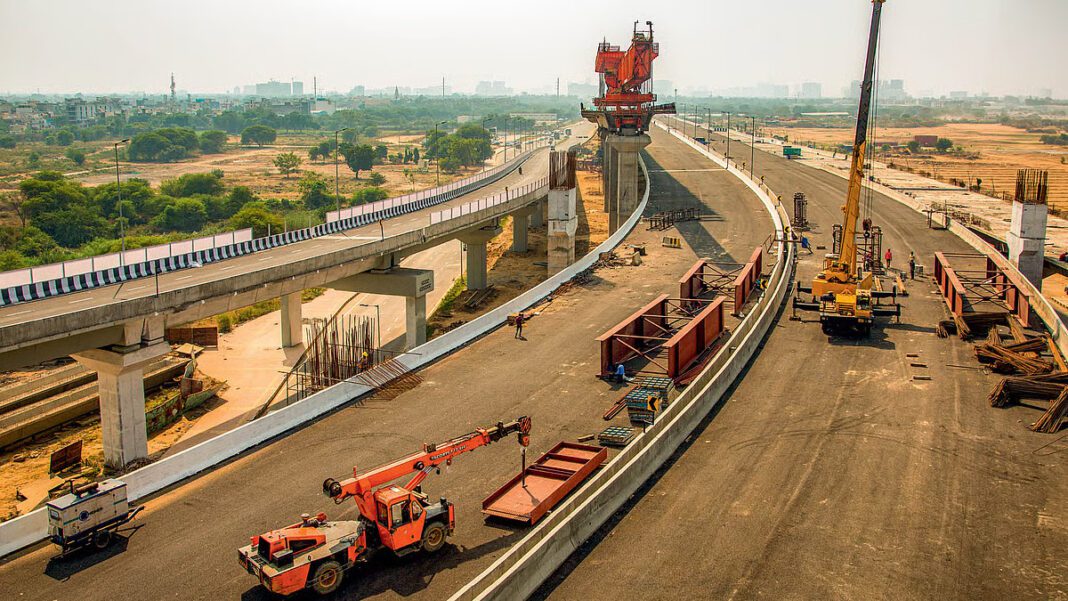
In a major commitment to infrastructure-led growth, Finance Minister Nirmala Sitharaman announced a historic capital expenditure (capex) outlay of ₹12.2 lakh crore for FY2026-27 during the Union Budget on February 1, 2026.
This represents a 9% increase over the ₹11.21 lakh crore allocated in the previous year, signaling that the government is doubling down on public investment to stimulate the economy and create jobs.
1. FY27 Capex: The “Future-Ready Bharat” Push
The hike is part of a decade-long strategy where public investment has grown six-fold from just ₹2 lakh crore in 2014-15 to the current ₹12.2 trillion.
- Target Allocation: ₹12.2 Lakh Crore ($145 Billion approx.)
- Growth Rate: ~9% YoY increase from FY26.
- Fiscal Discipline: Despite the high spending, the government aims to narrow the fiscal deficit to 4.3% of GDP for FY27, down from the 4.4% target for the current fiscal.
2. Key Infrastructure Highlights
The budget outlines several specific megaprojects and schemes designed to modernize India’s logistics and urban landscape:
- High-Speed Rail: Seven new environmentally sustainable passenger corridors were announced, including Mumbai–Pune, Hyderabad–Bengaluru, and Chennai–Bengaluru.
- Freight Corridors: A new Dedicated Freight Corridor will connect Dankuni (East) to Surat (West).
- Tier-2 & Tier-3 Focus: The government is shifting its focus to cities with populations over 5 lakh, earmarking ₹5,000 crore per City Economic Region (CER) to develop new growth hubs beyond metros.
- Inland Waterways: 20 new National Waterways are to be operationalized over the next five years, supported by a Coastal Cargo Promotion Scheme to double the share of water-based shipping to 12% by 2047.
- Rare Earth Corridors: Dedicated corridors for critical mineral processing will be established in Odisha, Kerala, Andhra Pradesh, and Tamil Nadu.
3. Boosting Private Participation
To “crowd in” private investment, the FM introduced new financial mechanisms to reduce project risk:
- Infrastructure Risk Guarantee Fund: This fund will provide partial credit guarantees to lenders, reducing the risk for private developers during the construction and early phases of a project.
- Asset Monetization: The government will accelerate the recycling of real estate assets of Central Public Sector Enterprises (CPSEs) through dedicated REITs (Real Estate Investment Trusts).
4. Market & Sectoral Impact
| Sector | Impact of Capex Hike |
| Capital Goods | Boost for heavy machinery and equipment manufacturers (L&T, Siemens). |
| Railways | Massive tailwind for wagon manufacturers and signal tech firms. |
| Logistics | Reduced costs through improved freight corridors and waterways. |
| Real Estate | Growth in Tier-2 and Tier-3 cities expected to drive housing demand. |
Conclusion: Infrastructure as the Primary Engine
By setting the capex at ₹12.2 lakh crore, the 2026 Budget reaffirms that the government is not ready to pull back on its “heavy lifting” role in the economy. While the STT hike on the same day shook the equity markets, the infrastructure outlay provides a long-term fundamental floor for the construction and manufacturing sectors. The success of this move will now depend on the efficient execution of the “Risk Guarantee Fund” to finally bring private capital off the sidelines.