
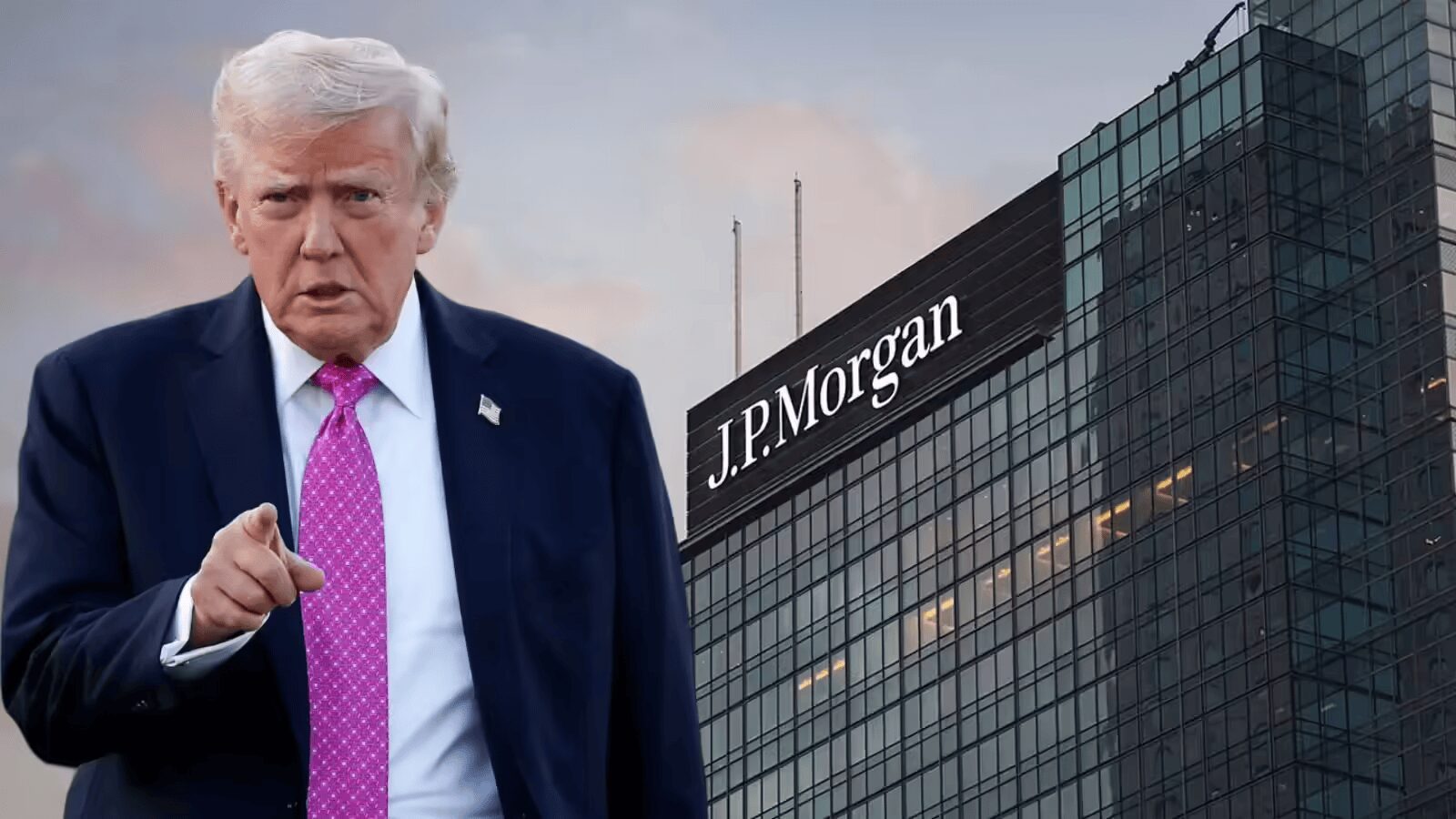
In a significant legal escalation between the White House and Wall Street, President Donald Trump filed a $5 billion lawsuit against JPMorgan Chase and its CEO, Jamie Dimon, on Thursday, January 22, 2026.
The lawsuit, filed in a Miami-Dade County state court in Florida, centers on allegations of “debanking”—the practice of financial institutions abruptly closing accounts or denying services for political or ideological reasons.
The Core Allegations
The lawsuit focuses on actions taken in early 2021, shortly after Trump left office following the events of January 6.
- Political Discrimination: Trump alleges that JPMorgan closed multiple personal and business accounts in February 2021 “as a result of political and social motivations” and what his lawyers describe as “woke beliefs.”
- The “Blacklist”: The filing claims that the bank placed Trump, his family, and the Trump Organization on a reputational “blacklist” shared with other financial institutions, effectively labeling them as “non-compliant” or “malfeasant.”
- Jamie Dimon’s Role: The suit names Dimon personally, alleging he violated the Florida Unfair and Deceptive Trade Practices Act. It claims Trump spoke with Dimon directly about the closures, but the CEO failed to follow up as promised.
- Financial & Reputational Harm: The lawsuit seeks $5 billion for trade libel and breach of contract, citing the “devastating impact” the sudden cutoff had on his hospitality businesses and his ability to access hundreds of millions of dollars.
JPMorgan’s Response
JPMorgan Chase has rejected the claims, stating the lawsuit has “no merit” and that it intends to defend itself vigorously.
- Regulatory Compliance: The bank stated it does not close accounts based on politics or religion. Instead, it maintains that accounts are terminated only when they create “legal or regulatory risk.”
- “Weaponization” Concerns: Interestingly, the bank’s statement expressed support for administration efforts to prevent the “weaponization of the banking sector,” while maintaining that current rules often force banks into these difficult positions.
Political Context: The 2026 Tension
The lawsuit follows a week of mounting friction between the Trump administration and major U.S. banks.
| Conflict Point | Description |
| Credit Card Caps | Trump has proposed a 10% cap on credit card interest rates, which Dimon recently called an “economic disaster” at the World Economic Forum in Davos. |
| Fed Independence | Tensions are high following a DOJ criminal probe into the Federal Reserve; Dimon has publicly defended the central bank’s autonomy, which Trump has criticized. |
| Debanking EO | In August 2025, Trump signed an executive order targeting banks that restrict services based on political or religious beliefs. |
Conclusion: A High-Stakes Legal Battle
This case marks the first time a sitting U.S. President has sued a major domestic bank for such a high sum while in office. It serves as a flashpoint for the broader debate over corporate “wokeism” and the power of financial institutions to gatekeep the global economy. As the case moves forward in Florida, it will likely set a major precedent for how “reputational risk” is used to justify the termination of high-profile clients.