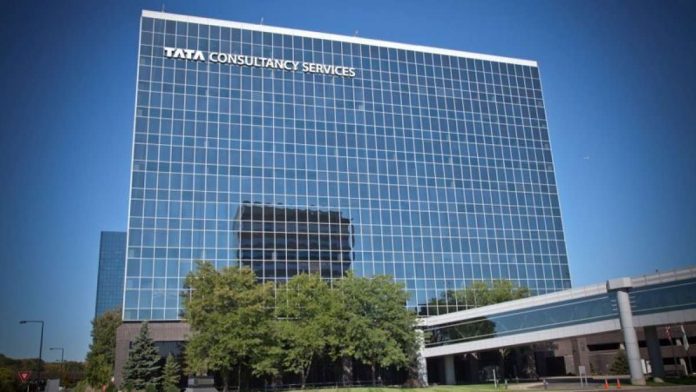


Shares of India’s largest software exporter, Tata Consultancy Services (TCS), descended to a fresh multi-year low today, validating market data that the IT bellwether has plunged 33% since the start of calendar year 2026.
During volatile intra-day trading on the National Stock Exchange (NSE), TCS shares slipped 2.5% to touch ₹2,144.10—marking its lowest valuation since August 2020 and registering a steep drop from its 52-week high of ₹3,538.
The drastic correction reflects a massive valuation re-rating sweeping across India’s premier information technology services sector.
The Core Catalyst: The Generative AI Outsource Threat
The primary driver behind the 2026 selloff is a fundamental structural anxiety gripping the market. Institutional investors are increasingly concerned that the blistering evolution of Generative AI (GenAI) automation tools is moving faster than legacy IT companies can adapt.
- The Outsourcing Bottleneck: There is growing fear that GenAI software engineering agents will severely cannibalize the traditional, labor-heavy offshore IT outsourcing model that has driven Indian tech margins for decades.
- The Spending Mismatch: Highlighting this friction, industry data released by Kotak Securities points out a stark divergence: while global corporate tech budgets allocated toward AI infrastructure increased by 10–13%, actual revenue growth trickling down to Indian IT services companies slowed to a mere 3–4%. Investors are aggressively questioning the long-term durability of offshore billable hours in an ecosystem dominated by AI coding agents.
Macro Factors Aggravating the IT Selloff
The multi-month correction at TCS has been significantly worsened by a wave of macroeconomic and geopolitical headwinds over the first half of June:
1. Wall Street Contagion
The local drop followed an aggressive route on Wall Street, where the US Nasdaq 100 plunged 5% in a single session. High-growth tech valuations worldwide are being drastically trimmed as investors pare down over-extended exposures.
2. Geopolitical and Inflationary Shocks
Sustained Foreign Institutional Investor (FII) selling has battered the NSE. Global risk-off sentiment has flared significantly due to rising crude oil and inflation fears stemming from the active US-Iran conflict in West Asia, triggering a broad capital flight away from emerging market equities.
Comparative Performance Table: The 2026 IT Melt
TCS is far from an isolated victim; the bloodbath has completely wiped out one-third of the total market capitalization of the Nifty IT Index since its peak on February 3, 2026.
| IT Entity / Stock | 2026 Peak-to-Trough Decline | Current Status & Multi-Year Milestones |
| Nifty IT Index | ~30% Down | Slid 9% in just the last four trading sessions. |
| TCS | 33% Down (YTD) | Hit a 6-year low; trading at ₹2,144.10. |
| HCL Technologies | 36% Down | Top index loser; fell from ₹1,780 to ₹1,132. |
| LTIMindtree | 36% Down | Massive baseline compression matching TCS. |
| Infosys | 25% – 32% Range | Broke below its critical ₹1,235 support level. |
| Wipro | 25% – 32% Range | Tanked to ₹187.80, hovering at its 52-week floor. |
The Contrarian View: A Generational Entry Opportunity?
While public equity markets are heavily discounting the sector, a select group of institutional brokerages argue that the selling has overshot actual corporate reality. Global brokerage Nomura maintained its “Buy” rating on TCS, assigning a target price of ₹2,930—representing a potential 33% upside from its current depressed levels.
The Bull Case Metrics
Analysts pushing the contrarian view point to under-appreciated fundamental tailwinds:
- The Valuation Floor: At ~₹2,144, TCS is trading at its most mathematically attractive multiple in four years—hovering at a trailing P/E of 15.7x compared to its legacy historical average of 25–28x.
- Hidden AI Revenue Pipeline: Far from being entirely left behind, TCS has quietly scaled its internal annualized AI revenue past $2.3 billion.
- System Integration Moats: Nomura’s research notes that enterprise technology systems are far too messy for corporations to simply deploy raw AI models out of the box without hands-on help. TCS’s legacy role as a system integrator for enterprise data structures, autonomous operations, and cybersecurity updates provides a massive operational moat that standalone AI platforms cannot easily replace.