
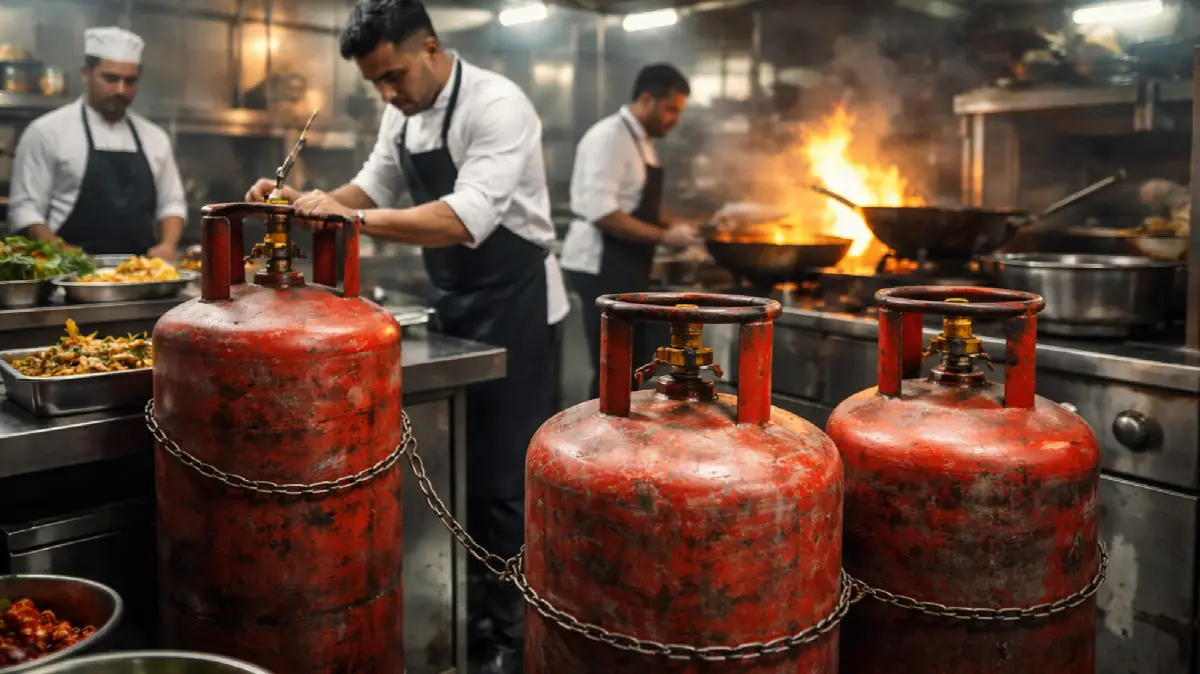
Saudi Aramco has officially informed buyers that all shipments of Liquefied Petroleum Gas (LPG) from its primary export terminal will remain suspended through late May 2026.
This extension of the supply halt follows a series of technical and geopolitical setbacks that have severely tightened the global LPG market, with particularly sharp consequences for household fuel security in Asia.
1. The Trigger: Juaymah Facility Damage
The suspension is centered on the Juaymah NGL facility near Ras Tanura, which is responsible for approximately 3.5% of global waterborne LPG exports.
- Structural Failure: In late February 2026, a critical support structure at the Juaymah terminal collapsed. While initial estimates suggested a quick fix, Aramco has told buyers that necessary repairs have been delayed due to technical complexities and the unavailability of specific components.
- Regional Conflict: The repair efforts have been further hampered by the broader U.S.-Israel-Iran conflict. Reports indicate the facility suffered additional impacts during recent regional hostilities, making it unsafe for full-scale operations and loading.
- Force Majeure: Aramco has effectively declared Force Majeure on several May contracts, forcing major importers to seek “emergency” cargoes from the U.S. Gulf Coast and West Africa.
2. Impact on India: A Cooking Fuel Crisis
India is the most vulnerable nation in this disruption, as it imports nearly 90% of its LPG from the Middle East, with Saudi Aramco alone accounting for ~15% of total supply.
- Consumption Slump: India’s domestic LPG consumption has already declined by 12.8% as of late April due to supply gaps and rising spot prices.
- Wait Times: Distribution agencies in several Indian states have begun reporting a 5–7 day delay in cylinder refills for residential customers.
- Price Volatility: To secure alternative supplies, Indian oil marketing companies (OMCs) are paying a premium of $20–$30 per tonne above standard Saudi contract prices, putting pressure on the government to either increase subsidies or hike retail rates.
3. The “Strait of Hormuz” Bottleneck
Even if the Juaymah facility were fully repaired tomorrow, the near-total closure of the Strait of Hormuz has made maritime transport for LPG tankers nearly impossible.
- Rerouting Limits: While Aramco has successfully rerouted some crude oil via the East-West Pipeline to the Red Sea port of Yanbu, that infrastructure is not fully equipped to handle the specialized refrigeration and pressure requirements for large-scale LPG exports.
- Insurance Spikes: For the few tankers still attempting the Hormuz route, insurance premiums have surged by over 400%, making the delivered cost of fuel unsustainable for many emerging markets.
4. Global Supply Outlook
| Region | Impact of Aramco Halt |
| China | Heavy impact on PDH (Propane Dehydrogenation) plants; several units have gone offline. |
| Southeast Asia | Increased reliance on Australian and U.S. cargoes; rising surcharges on gas utilities. |
| United States | Record demand for exports; US Gulf Coast terminals are currently operating at 100% capacity. |