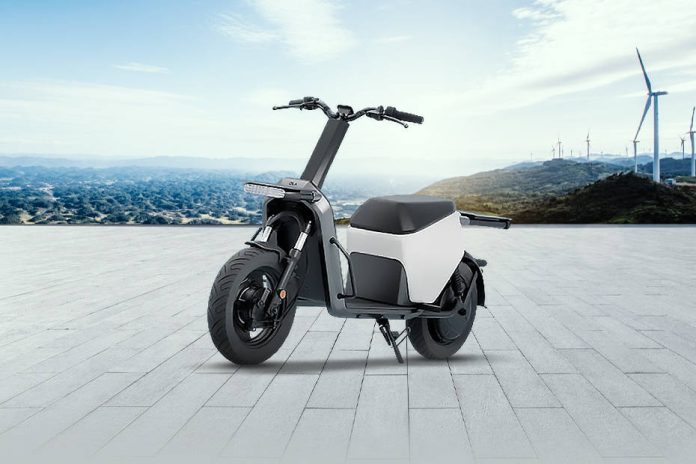


Positioning itself to capture India’s rapidly accelerating last-mile logistics and quick-commerce boom, Ola Electric is preparing to enter the commercial B2B electric vehicle sector.
According to government certification documents, the country’s leading EV manufacturer has officially secured homologation approval from the Automotive Research Association of India (ARAI) under the Central Motor Vehicle Rules (CMVR). The certification represents one of the final regulatory hurdles in the automotive manufacturing pipeline, indicating that a commercial market launch is imminent and could arrive as early as this quarter.
The structural pivot lands at a critical moment for the gig economy. Driven by West Asia shipping disruptions around the Strait of Hormuz, rising domestic petrol prices have severely squeezed the daily earnings of delivery executives, forcing massive demand for low-TCO (Total Cost of Ownership) alternatives.
The Blueprint: S1 Architecture Adapted for Fleet Duty
The regulatory filings reveal that rather than engineering an entirely new chassis from scratch, Ola Electric has cleverly adapted its high-volume Ola S1 consumer platform to meet heavy-duty utility specifications.
- The Powertrain Class: Certified as an L1-category electric scooter, the vehicle is anchored by a 4-kilowatt (kW) electric motor.
- Top Speed Threshold: The commercial variant is electronically governed to a top speed of 70 km/h, striking a balance between quick urban navigation and battery preservation.
- Battery Configurations: Testing documents indicate that the vehicle will support multi-tier battery options—spanning 2 kWh, 3 kWh, and 4 kWh configurations—likely derived from the cost-efficient S1 X Gen 3 ecosystem.
Built for Heavy Payloads and Quick Commerce
Unlike customer-centric models that prioritize premium software features like speakers, hyper-modes, and proximity unlocking, the upcoming commercial variant is engineered as a stripped-back, ruggedized workhorse.
To meet the continuous performance demands of hyperlocal apps like Zomato, Swiggy, Zepto, and Blinkit, Ola’s engineering team has reinforced the vehicle’s structural layout. The upcoming model features a modular rear design capable of supporting specialized attachments, including large hot-insulated delivery boxes and cargo racks. The e-two-wheeler is officially certified to support heavy payloads ranging from 120 kg to 150 kg while accommodating both a rider and a pillion.
Securing Volume: The Second Shot at the Gig Economy
This launch represents Ola Electric’s second distinct attempt to crack the business-to-business (B2B) ecosystem. In late 2024, the firm briefly debuted the “Ola Gig” and “Ola Gig+” budget scooters priced aggressively at ₹39,999 and ₹49,999. However, those initial models were quietly shelved in mid-2025 as the company temporarily narrowed its capital allocation focus toward expanding its flagship consumer portfolio and launching its Roadster electric motorcycle platform.
With frontend operations now stabilized, founder and CEO Bhavish Aggarwal has indicated that the company is ready to re-engage fleet operators.
“With the fuel price rise, we are seeing a lot of demand for our EVs from the gig ecosystem,” Aggarwal recently shared on X. “They need EVs the most as their daily run and fuel cost is the highest.”
By leveraging the massive scale of the Ola Futurefactory, insiders note that the company possesses the manufacturing capacity to rapidly churn out up to 20,000 commercial units per month out of the gate. Entering this segment allows Ola to insulate its production lines from cyclical consumer buying habits while securing predictable, large-scale bulk orders from third-party logistics firms and fleet leasing platforms like Zypp Electric and MoEVing.