
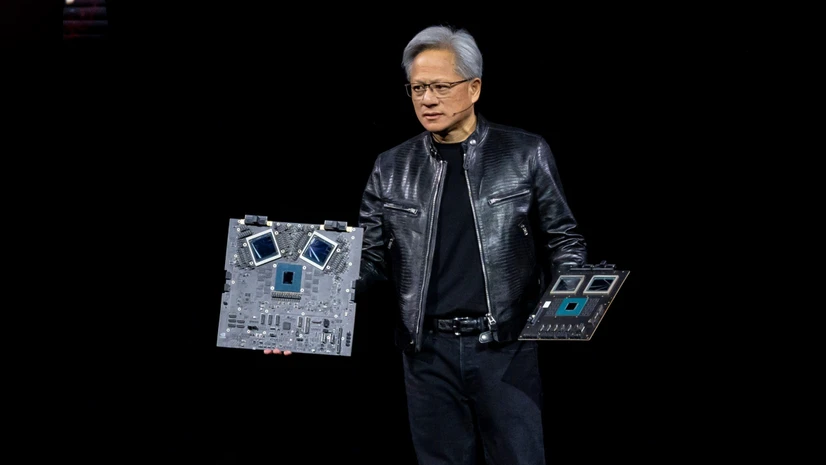
At the GTC 2026 keynote on March 16, 2026, NVIDIA CEO Jensen Huang announced DLSS 5, a revolutionary leap in computer graphics that shifts the focus from simple performance scaling to real-time neural rendering. Described by Huang as a “dramatic leap in visual realism,” DLSS 5 aims to bridge the divide between real-time game engines and Hollywood-grade cinematic VFX.
Beyond Upscaling: How Neural Rendering Works
Unlike previous iterations that focused on resolution upscaling (DLSS 2) and frame generation (DLSS 3), DLSS 5 introduces a model that actually infuses pixels with photoreal lighting and materials.
- AI-Guided Materials: The model is trained to recognize “scene semantics”—identifying the difference between skin, hair, fabric, and metal. It then recalculates how light should interact with these specific surfaces in real-time.
- Deterministic Lighting: It uses a game’s color and motion vectors as input to ensure the AI-generated lighting remains perfectly anchored to the developer’s original 3D world, avoiding the “bespoke” or unpredictable nature of standard Generative AI.
- Complex Effects: The tech handles notoriously difficult effects like subsurface scattering on skin and the delicate sheen of fabric with a precision previously only possible in offline renders.
The Uncanny Valley & “AI Slop” Backlash
The announcement has sparked a heated debate within the gaming community. While tech analysts like Digital Foundry called the demo “frankly astonishing,” some social media users have labeled it an “AI Slop Filter.”
- The Controversy: Early footage of Resident Evil Requiem showed DLSS 5 adding makeup, eye shadow, and fuller lips to the protagonist, Grace Ashcroft. Critics argue this superimposes an “uncanny” AI aesthetic that overrides the original artistic vision of the game developers.
- NVIDIA’s Response: The company clarified that DLSS 5 is not a filter. The SDK provides developers with granular controls for intensity, color grading, and masking, allowing them to “turn off” the effect on specific character faces or areas to maintain their unique aesthetic.
Launch Details and Performance
NVIDIA is targeting a Fall 2026 release for the technology.
| Feature | Details |
| Compatibility | Targeted for RTX 50-series (Blackwell) and future GPUs. |
| Resolution | Supports up to 4K real-time processing. |
| Framework | Integrated via NVIDIA Streamline (replacing/enhancing DLSS 4.5). |
| Confirmed Games | Starfield, Resident Evil Requiem, Hogwarts Legacy, Assassin’s Creed Shadows, The Elder Scrolls IV: Oblivion Remastered. |
While the GTC demo required two RTX 5090s (one for rendering, one for the DLSS 5 model), NVIDIA has committed to optimizing the software to run on a single GPU by the time it ships later this year.
The Future of Graphics
DLSS 5 is being positioned as the successor to path tracing. While path tracing handles the accuracy of where light goes, DLSS 5 handles the photorealism of how that light looks when it hits a surface. As Jensen Huang noted, “About 10 years ago, we thought AI would revolutionize graphics… today, AI is going back and reinventing how computer graphics is done altogether.”