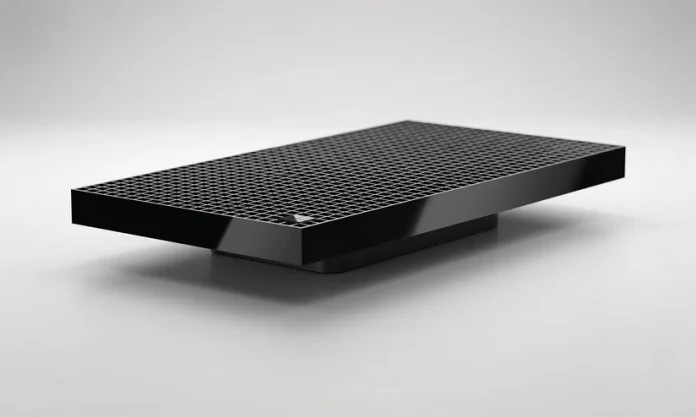


Taking direct aim at the unpredictable cloud bills squeezing software engineering teams, Microsoft has officially introduced the Surface RTX Spark Dev Box.
Unveiled as a headline piece of hardware at Microsoft Build 2026, the compact desktop is purpose-built to let developers fine-tune, prototype, and run massive, data-heavy AI models directly on their desks. By shifting heavy inference away from remote data centers, Microsoft is structurally challenging the meter-based, per-token cloud pricing model that has governed the AI landscape for years.
1. The Underwriter: Nvidia’s 1-Petaflop Spark Superchip
At the center of the Dev Box is the freshly announced Nvidia RTX Spark superchip, a powerhouse co-developed alongside MediaTek to maximize computing performance per watt. The system merges graphics, AI, and processing capabilities into a singular local architecture:
- The Silicon Core: It combines an internal Nvidia Blackwell-architecture GPU (housing 6,144 CUDA cores and 5th-Gen Tensor Cores) with a high-efficiency 20-core Nvidia Grace CPU.
- Unified Memory Pool: The superchip is backed by 128 GB of unified memory connected via an NVLink-C2C interconnect, yielding up to 300 GB/s of bandwidth.
- The Raw Performance: Operating on FP4 sparse precision, the computer pipes out 1 petaflop of local AI compute.
In practice, this allows software engineers to fluidly execute multi-turn, agentic workflows and locally run large language models with up to 120 billion parameters and 1-million-token context windows.
2. Structural Design: The “1,000 Air Vent” Monolith
Moving completely away from the classic look of its consumer-facing hardware lines, Microsoft engineered the Dev Box with a distinct, rugged monolithic layout.
The chassis features a 3D-printed aluminum body pierced by exactly 1,000 air vents—a deliberate visual shout-out to the machine’s 1,000 teraflops (1 petaflop) of processing power. The entire aluminum shell is engineered to double as a giant heatsink to handle long-running local training loops and heavy agentic pipelines. While the device can dissipate up to 100W of power, it uses an internal fan system to guarantee sustained performance, avoiding the aggressive thermal throttling that limits its sibling form factor, the Surface Laptop Ultra.
3. Shipped with a Pre-Configured Developer Image
To save engineers from spending hours setting up a fresh environment, the Dev Box arrives pre-configured at the image level with a suite of out-of-the-box Windows 11 Pro optimizations:
- The Default Shell: PowerShell 7 acts as the primary command-line interface, with the OS natively adjusted to a dark theme, Widgets completely uninstalled, and Do Not Disturb turned on by default.
- Subsystem Architecture: Windows Subsystem for Linux 2 (WSL 2) comes pre-configured with full GPU passthrough and native CUDA support, making it simple to run Linux-dependent AI repositories.
- Pre-Baked Tools: Core developer software layers—including VS Code, Git, GitHub Copilot, Python, and Node.js—come entirely pre-installed.
4. The Cloud Irony: Fixed Cost vs. Azure Growth
The strategy behind the Surface Dev Box introduces an intriguing corporate paradox for Microsoft. The company makes billions of dollars in recurring revenue by charging enterprises to scale their processing workflows across its Azure cloud data centers.
By creating a physical computer explicitly built to minimize cloud reliance, Microsoft is acknowledging a growing enterprise frustration: continuous iterative model prototyping on cloud meters is financially unsustainable for small and medium-sized teams. Microsoft’s gamble is that by owning a developer’s local workflow box, it will naturally become the default platform when those developers are finally ready to push their finished models into production-scale Azure deployment.
5. Availability and Market Placement
The Surface RTX Spark Dev Box is scheduled for a formal retail release later this fall. In the United States, it will be sold exclusively through Microsoft’s direct online store.
While exact retail pricing has not been publicly detailed yet, industry insiders expect the desktop unit to launch below the $2,899 starting point tipped for the display-and-battery-equipped Surface Laptop Ultra, positioning it as a highly compelling “Windows Mac Studio” equivalent for the AI development sector.