
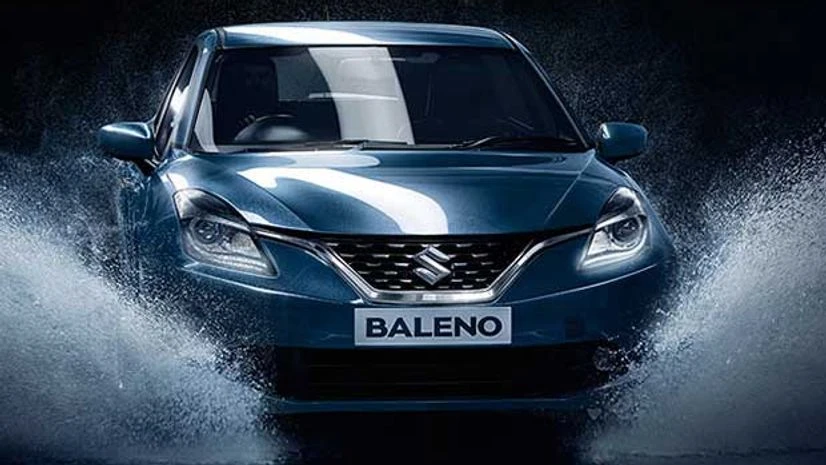
Maruti Suzuki, long the undisputed king of the Indian roads, has seen its market share slip to a 13-year low of 39.26% for the fiscal year ending March 2026.
This decline from the ~51% peak seen in 2019-20 marks a structural shift in the Indian automotive landscape, where “value-hatchbacks”—Maruti’s traditional fortress—are being rapidly replaced by high-riding SUVs.
1. The SUV Gap: A Strategic Mismatch
The primary driver of Maruti’s share erosion is its slow pivot to the SUV segment, which now accounts for a record 67% of all passenger vehicles sold in India.
- Compact Dominance vs. SUV Struggle: While Maruti still controls 67% of the compact car market, that segment grew by less than 2% this year. In contrast, the Utility Vehicle (UV) segment grew by 11%, but Maruti’s share within it remains under 25%.
- Diesel Deficit: Competitors like Mahindra and Hyundai continue to draw significant volumes from diesel SUVs. Maruti’s “petrol-only/hybrid” strategy has alienated a section of long-distance and heavy-SUV buyers.
- The “Victoris” and “Jimny” Factor: Despite new launches like the Maruti Suzuki Victoris and the Jimny, the company has struggled to unseat the dominance of the Hyundai Creta and Mahindra XUV700 in the ₹15–25 lakh bracket.
2. The New Competitive Order (FY26 Share)
For the first time in over a decade, the “gap” between Maruti and the rest of the field is narrowing significantly as domestic rivals Mahindra and Tata capitalize on the SUV craze.
| Manufacturer | Market Share (FY26) | Trend | Key Driver |
| Maruti Suzuki | 39.26% | ↓ | 13-year low; hit by hatch-slump. |
| Mahindra | 14.21% | ↑ | Overtook Tata; massive SUV demand. |
| Tata Motors | 13.00% | ↑ | Strong EV sales (Nexon/Punch). |
| Hyundai | ~12.5% | ↓ | Slid to No. 4; facing “domestic” pressure. |
3. FY26 Operational Snapshot: Profits vs. Volume
Despite the falling market share, Maruti remains a financial powerhouse due to its industry-leading “lean” manufacturing and high margins on premium Nexa models.
- Record Sales Volume: Paradoxically, Maruti achieved its highest-ever annual sales of 2.13 million units in FY26, proving that while its “slice of the pie” is smaller, the “pie itself” (the total Indian market) is growing at record rates (4.7 million units).
- Stock Performance: Shares are currently trading around ₹13,289, with analysts maintaining a ‘Buy’ rating based on the company’s strong 21.7% ROCE and debt-free balance sheet.
- Price Hike Looming: Management has indicated a price review for its small car portfolio in late April 2026 to offset rising commodity costs and lower economies of scale in that segment.
4. Why This Matters for Your Portfolio
- The “Premiumization” Trap: As India moves from a “developing” to a “middle-income” economy, the entry-level cars (Alto, S-Presso) that built Maruti are becoming less relevant. Investors are now favoring OEMs with higher “Average Selling Prices” (ASPs).
- EV Transition Risk: Maruti’s first major Battery Electric Vehicle (BEV)—the e-Vitara—is only expected in late FY27. This 3-4 year “EV lag” compared to Tata Motors is a primary reason why institutional investors are applying a “transition discount” to Maruti’s stock.
- Rural Exposure: As someone based in Udaipur, you’ll note that rural demand (which drives Maruti’s hatchbacks) has been muted by food inflation. This has directly contributed to the 8% decline in the sub-₹5 lakh segment this quarter.
5. Management’s “50% Target”
Maruti Suzuki Chairman R.C. Bhargava remains adamant that the company can reclaim 50% market share by FY31. This recovery plan relies on:
- 7 New SUV Launches: Planned over the next 5 years to saturate every sub-segment.
- Capacity Expansion: A new 1-million-unit plant in Gujarat (operational by FY28).
- Hybrid Push: Doubling down on strong-hybrids as a bridge for Indian consumers who aren’t yet ready for full EVs.