
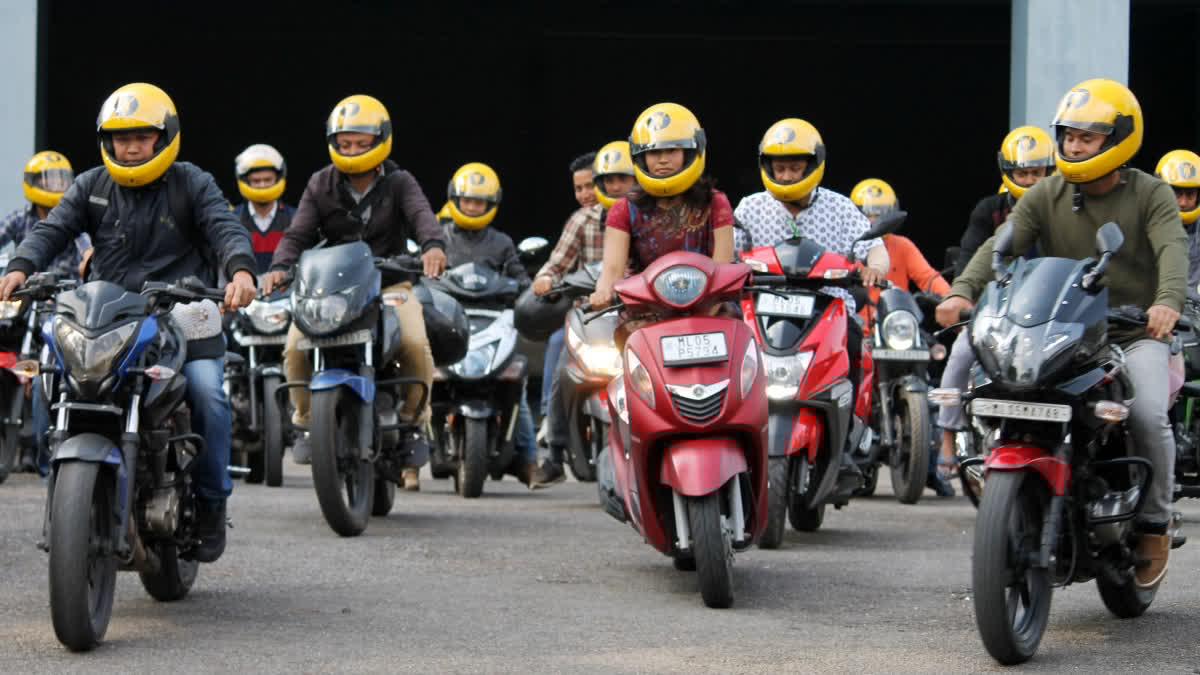
The court’s decision settles a years-long dispute between app-based aggregators and state transport authorities, primarily centering on whether motorcycles could be classified as commercial vehicles.
Key Judicial Observations
- Transport Vehicle Classification: The High Court ruled that motorcycles fall squarely within the definition of “transport vehicles” under the Motor Vehicles Act, 1988.
- Right to Trade: The bench observed that legitimate trade is protected under Article 19(1)(g) of the Constitution. It described the state’s previous stance as a “de facto prohibition” that could not be sustained.
- Non-Discriminatory Permits: The court directed the state government that it cannot deny permits to owners merely on the ground that the vehicle is a motorcycle.
Guidelines for Riders and Aggregators
While the ban is lifted, the court has authorized the state government and Regional Transport Authorities (RTAs) to regulate the sector to ensure safety and order.
| Entity | Mandatory Requirements (Post-Verdict) |
| Individual Riders | Must apply for registration as a transport vehicle (yellow-board number plates). |
| Aggregators (Ola/Uber/Rapido) | Must file fresh applications for licenses under the Aggregator Rules. |
| Identification | Platforms must display details of onboarded vehicle owners so they are accessible to riders. |
| Local Restrictions | The state is free to impose conditions, such as specifying routes or maximum passenger/luggage weight under Section 74(2). |
Impact on the Gig Economy
The ruling brings immediate relief to an estimated 6 lakh bike taxi riders in Karnataka whose livelihoods were jeopardized by the June 2025 suspension.
- Uber Statement: “We welcome the decision to recognize bike taxis as a vital mobility lifeline… this will bring relief to lakhs of drivers.”
- Commuter Relief: For Bengaluru especially, the return of bike taxis is expected to alleviate last-mile connectivity gaps and provide a faster, more affordable alternative to traditional cabs and autos during peak traffic.
Conclusion: A New Regulatory Chapter
The verdict puts the onus back on the Karnataka government to process pending applications and frame reasonable guidelines rather than imposing blanket bans. While the state can still examine safety and law-and-order aspects, it can no longer “lag behind emerging circumstances.” For the millions of commuters in Bengaluru, the “yellow-board bike” is set to become a permanent fixture of the city’s transport landscape by February 2026.