
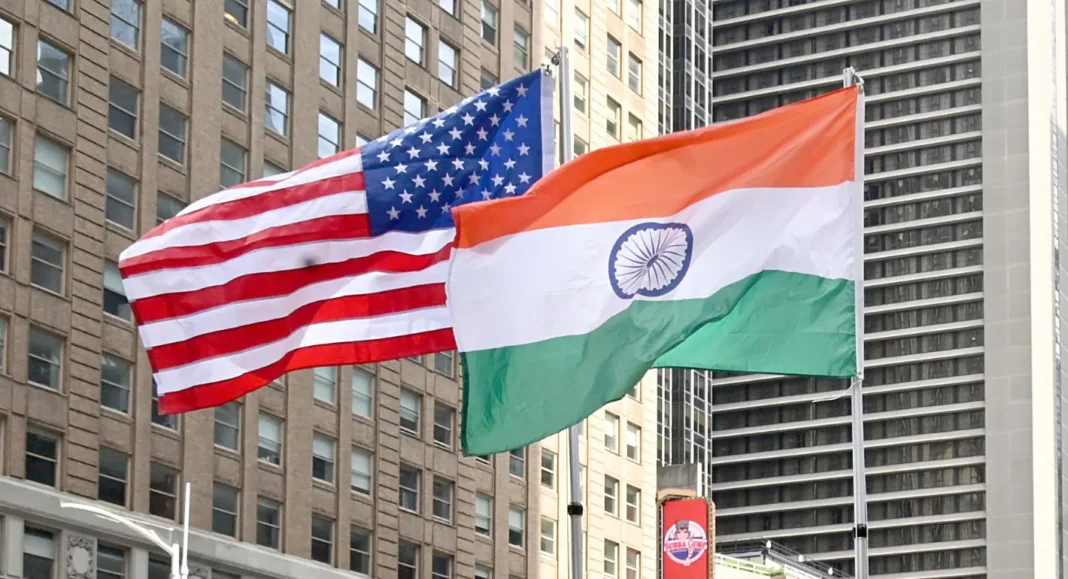
In a historic pivot for global trade, President Donald Trump and Prime Minister Narendra Modi announced a sweeping India-USA Trade Deal on February 2, 2026.
The agreement marks a significant de-escalation of trade tensions following a year of “punitive” tariffs. Effective immediately, the United States has slashed its overall tariff on Indian goods from a peak of 50% down to 18%, while India has pledged a massive $500 billion in American purchases.
1. The “18% Pivot”: Reciprocal Tariff Reductions
The cornerstone of the deal is the immediate reduction of the aggressive tariff regime that had strained bilateral relations throughout 2025.
- Tariff Cut: The U.S. has lowered its reciprocal tariff on Indian imports from 25% to 18%.
- Rescinding the Penalty: Critically, the additional 25% punitive duty—originally imposed due to India’s purchase of Russian oil—has been fully removed.
- Global Competitive Edge: At 18%, Indian exports now face lower U.S. tariffs than regional rivals like China (34%), Vietnam (20%), and Bangladesh (20%), giving “Made in India” products a massive strategic advantage.
2. The Russian Oil Quid Pro Quo
President Trump explicitly linked the tariff relief to a major shift in India’s energy and geopolitical strategy.
- Ceasing Russian Imports: Trump claimed that India has agreed to stop buying Russian oil entirely (rather than just reducing it) to help “END THE WAR in Ukraine.”
- Alternative Sourcing: India will reportedly shift its energy sourcing to the United States and potentially Venezuela.
- Energy Security: This transition is backed by India’s commitment to purchase over $500 billion in U.S. energy, technology, agriculture, and coal over the coming years.
3. “Buy American” vs. “Make in India”
The deal is being framed as a “win-win” that aligns Trump’s MAGA (Make America Great Again) with Modi’s MIGA (Make India Great Again) initiatives.
| Feature | India’s Commitment | U.S. Commitment |
| Tariff Barriers | Move toward Zero tariffs on U.S. goods. | Reduce overall rate to 18%. |
| Purchases | $500 Billion+ “Buy American” pledge. | Market access for “Made in India” tech & textiles. |
| Sectors | Energy, Tech, Coal, Agriculture. | Pharma, Textiles, Auto components. |
4. Market Reaction: A “Mega Partnership”
The announcement triggered a massive rally in Indian and global financial markets on February 3, 2026:
- Sensex & Nifty: The Indian stock market indices soared, with the Sensex jumping over 3,600 points in early trade.
- Rupee Surge: The Indian Rupee strengthened significantly, gaining over 110 paise against the dollar as foreign investors anticipated a surge in capital inflows.
- Industry Gains: The Gems & Jewellery, Textiles, and Auto Component sectors—which were previously struggling under 50% duties—are expected to see an immediate recovery in export volumes.
Conclusion: A Structural Reset
While opposition leaders in India have expressed caution regarding the “concessions” made on energy and agriculture, the consensus among business leaders is that the deal provides much-needed stability. By slashing tariffs to 18%, the Trump administration has effectively placed India at the center of its Indo-Pacific trade strategy. For PM Modi, the deal secures the future of the “Make in India” vision, ensuring that Indian products remain the most competitive alternative to Chinese manufacturing in the U.S. market.