

In a major geopolitical move to safeguard advanced technologies from coercive trade embargoes, India and the United States have officially concluded a bilateral framework on the “Securing of Supply in the Mining and Processing of Critical Minerals and Rare Earths”.
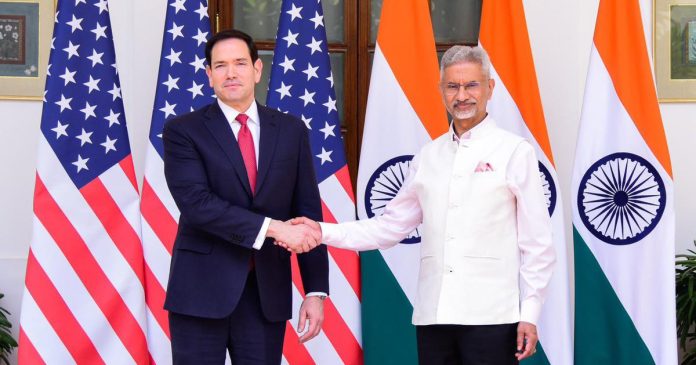
The pact was signed in New Delhi by Indian External Affairs Minister Dr. S. Jaishankar and U.S. Secretary of State Marco Rubio on the concluding day of Rubio’s high-profile four-day diplomatic visit. The agreement marks a critical milestone in establishing an end-to-end, trusted supply corridor for the core materials underpinning semiconductors, electric vehicles, and defense defense hardware.
Inside the Framework: Scope and Objectives
The bilateral agreement is designed to deepen comprehensive public and private sector cooperation across every stage of the raw materials lifecycle. According to statements released by the Ministry of External Affairs (MEA) and the U.S. Embassy, the framework targets four foundational areas:
- Exploration and Extraction: Jointly developing untapped mineral deposits to build long-term resource independence.
- Advanced Processing and Refining: Bridging technological gaps to ensure raw elements can be converted into industrial-grade components within allied territories.
- Recycling and Scrap Management: Collaborating on the processing and recovery of critical minerals from electronic and industrial scrap.
- Coordinated Financing: Jointly mobilizing capital, underwritten loans, and private investments to fund capital-intensive mining infrastructure.
While official statements avoided naming specific countries, the U.S. Embassy explicitly noted that the framework will focus on protecting sensitive tech pipelines from “coercive market practices” and reducing “collective vulnerability to single-source monopolies”—a clear reference to China’s dominant stranglehold on the global rare earth ecosystem.
Churning the Geopolitical Landscape
The signing arrives amidst heightened urgency following a massive supply shock last year, when Beijing completely halted the export of high-performance rare earth magnets in April 2025 as part of an escalating trade war with Washington. The sudden embargo sent shockwaves through India’s electronics, clean energy, and defense sectors, exposing deep dependencies.
In response, New Delhi has aggressively pivoted toward resource sovereignty:
- Domestic Missions: India launched a ₹16,300 crore National Critical Minerals Mission (NCMM) alongside a separate ₹7,280 crore incentive scheme to establish local rare earth magnet production capacities.
- Rare Earth Corridors: The government’s recent budget laid blueprints for dedicated rare earth mineral processing corridors across coastal states including Odisha, Kerala, Andhra Pradesh, and Tamil Nadu.
- Diplomatic Alliances: Beyond the U.S. pact, India recently joined Washington’s elite Pax Silica initiative and is currently in advanced discussions to sign a parallel critical minerals treaty with Russia.
Coupled with a $20 Billion Quad Initiative
The bilateral India-U.S. agreement was closely mirrored by a simultaneous multilateral breakthrough. On the sidelines of the bilateral talks, the Quad Foreign Ministers (representing India, the US, Japan, and Australia) officially finalized their own joint Critical Minerals Initiative.
Under the broader Quad architecture, the four nations intend to mobilize up to $20 billion in collective government and private sector support. This capital—consisting of direct investments, loans, and long-term purchase guarantees—will be deployed to fund extraction and alternative recycling projects throughout the Indo-Pacific region, ensuring that member nations have resilient alternatives during future diplomatic or supply-chain bottlenecks.