
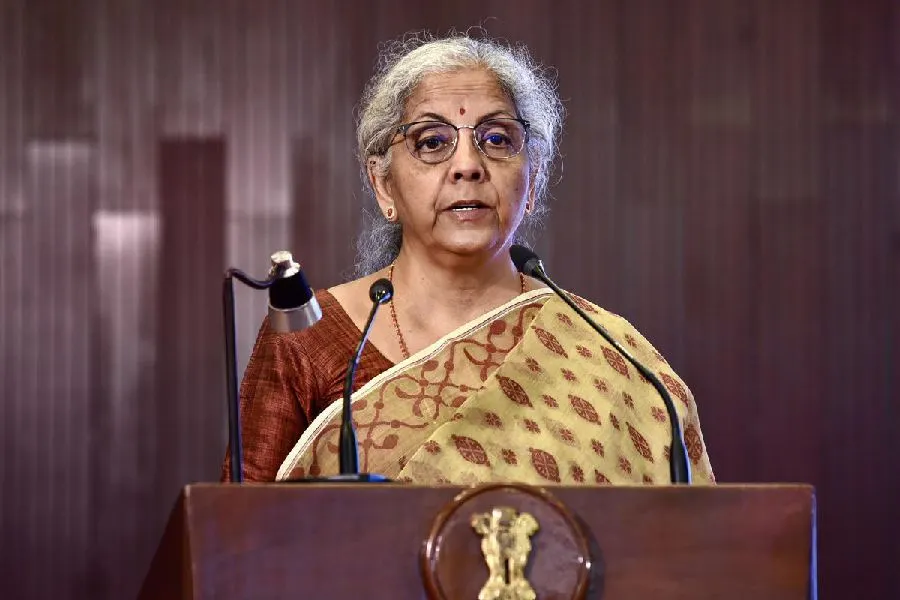
In her Union Budget 2026 address on February 1, 2026, Finance Minister Nirmala Sitharaman announced that the government has successfully fulfilled its medium-term commitment to bring the fiscal deficit below 4.5% of GDP by FY26.
The revised estimate (RE) for the fiscal deficit in FY2025-26 is pegged at 4.4%, meeting the target set during the post-pandemic recovery phase. For the upcoming year (FY2026-27), the government has set an even more ambitious target of 4.3%.
1. The Fiscal Glide Path: 2021 to 2026
The journey to 4.4% has been a cornerstone of India’s macroeconomic stability since the pandemic-induced spike in 2020-21.
| Financial Year | Fiscal Deficit (% of GDP) | Phase |
| FY2020-21 | 9.2% | Pandemic Peak |
| FY2023-24 | 5.6% | Consolidation Phase |
| FY2024-25 | 4.8% | Pre-Election Prudence |
| FY2025-26 (RE) | 4.4% | Target Achieved (<4.5%) |
| FY2026-27 (BE) | 4.3% | New Consolidation Goal |
2. How India Beat the 4.5% Target
The government credited “prudent fiscal management” and “revenue buoyancy” for hitting the target despite global volatility.
- Direct Tax Surge: Direct tax collections now account for nearly 59% of total taxes, up from 52% pre-pandemic, providing a stable revenue base.
- GST Resilience: Monthly GST collections consistently hit new highs in FY26, aligning closely with a nominal GDP growth of 10%.
- Subsidy Rationalization: A shift away from “pure consumption subsidies” toward “bricks and mortar” investment helped trim revenue expenditure from 13.6% of GDP in FY22 to 10.9% in FY25.
- RBI Dividend: A record dividend of ₹2.69 lakh crore from the RBI in FY26 provided a massive “fiscal cushion” that allowed the government to maintain capex without increasing borrowing.
3. The “Stargate” Shift: A New Fiscal Anchor
While the 4.5% target has been met, the Finance Minister announced that the government is now moving toward a more sophisticated fiscal anchor.
- Old Anchor: Annual Fiscal Deficit (Difference between revenue and spending).
- New Anchor: Debt-to-GDP Ratio.
- The Goal: To reduce central government debt to 50% (±1%) by March 2031.
- Why the Change? A debt-to-GDP anchor provides more flexibility to respond to global economic shocks (like trade tariffs) while ensuring that the total “stock” of debt remains sustainable over the long term.
4. Borrowing Strategy for FY27
To fund the 4.3% deficit in the next fiscal year, the government has outlined a transparent borrowing plan to keep bond yields stable:
- Gross Market Borrowing: Estimated at ₹17.2 lakh crore.
- Net Market Borrowing: Estimated at ₹11.7 lakh crore.
- Financing Mix: The balance will be funded through small savings schemes and other internal receipts, ensuring that the private sector is not “crowded out” from the credit market.
Conclusion: From Deficit to Debt Management
Achieving the sub-4.5% deficit in FY26 is a victory for India’s credibility with international rating agencies. By hitting this target while simultaneously hiking capex to ₹12.2 lakh crore, the government has proven that fiscal consolidation does not have to come at the expense of growth. As the focus shifts to the 4.3% target for FY27, the real test will be maintaining this discipline as the 8th Pay Commission implementation nears.