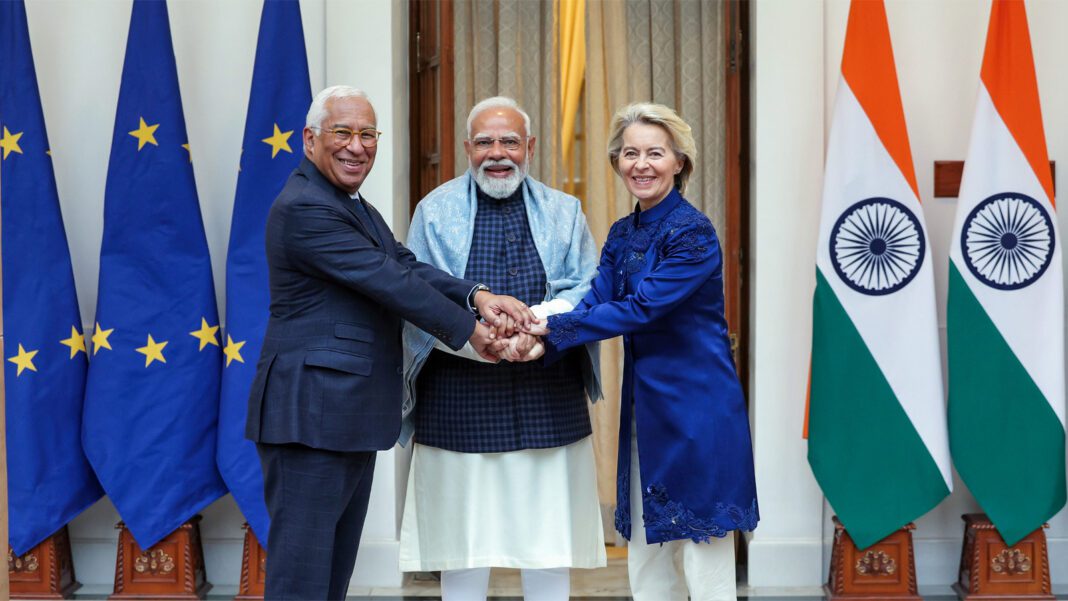

In a landmark move for India’s high-tech manufacturing sector, the India-EU Free Trade Agreement (FTA) finalized on January 27, 2026, includes a sweeping mandate to eliminate tariffs on nearly all electronic imports.
The agreement will see 99.6% of India’s electronics and electrical machinery imports from the EU transition to a 0% tariff over a phased 10-year period. This move is designed to integrate Indian manufacturers into the high-value European supply chain while lowering costs for domestic consumers of premium tech.
The Electronics “Zero-Duty” Breakdown
The electronics sector was a primary focus of the negotiations, with both sides seeking to reduce their reliance on East Asian supply chains. The 0% tariff covers everything from raw components to finished high-end devices.
What Gets Cheaper?
- Core Components: Duties of up to 22.5% on electrical machinery and core electronic components (capacitors, resistors, PCBs) will be eliminated.
- Semiconductors: Integrated circuits and semiconductor devices will see a total removal of the current 11% to 15% “protectionist” duties.
- Consumer Tech: High-end European hardware, including specialized medical electronics and high-fidelity audio equipment, will drop from up to 44% duty to 0%.
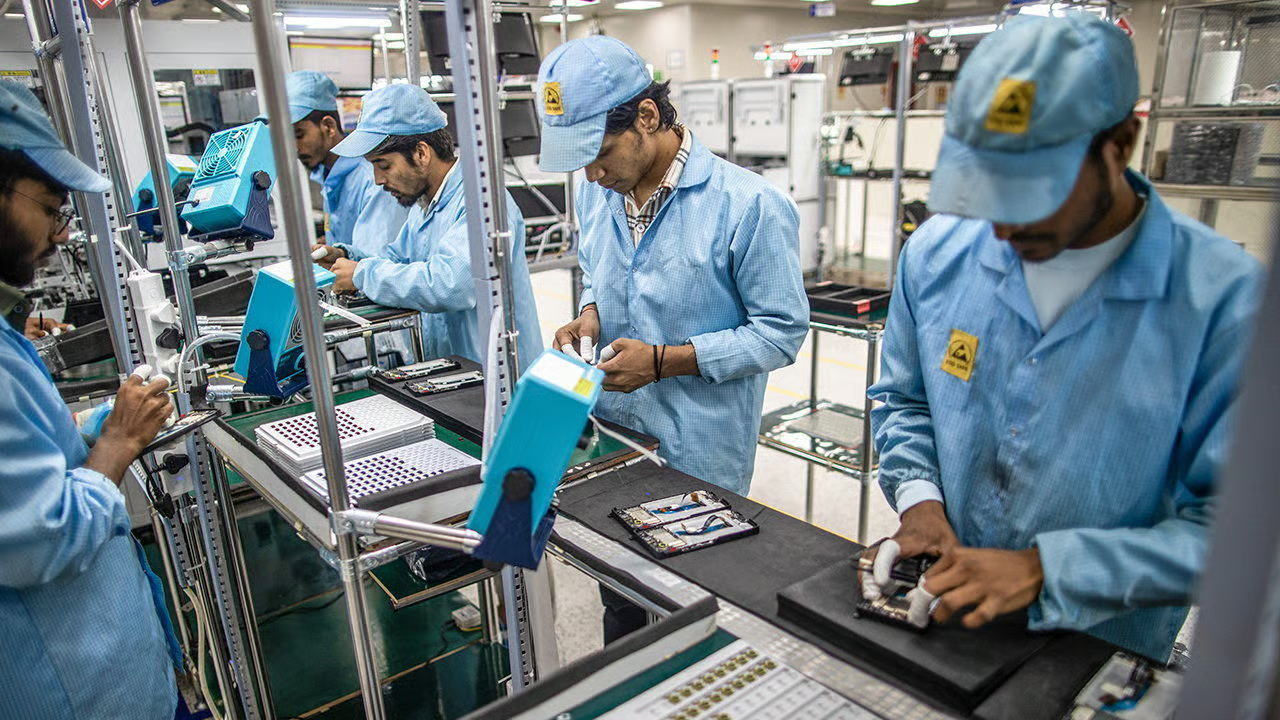
- Smartphone Parts: Key components for mobile manufacturing—critical for Apple and Samsung’s Indian factories—will move to zero duty, significantly lowering the “Bill of Materials” (BoM) for Made-in-India devices.
Phased Implementation: The 10-Year Runway
To protect domestic players under the Production Linked Incentive (PLI) scheme, the tariff cuts are not immediate but follow a strategic timeline:
| Category | Initial Reduction (2027) | Full Zero-Duty Year |
| Industrial Machinery | Immediate 25% Cut | 2030 (Year 4) |
| Active Components | Immediate 10% Cut | 2032 (Year 6) |
| Finished Consumer Goods | Phased over 10 years | 2036 (Year 10) |
| Medical Electronics | Immediate 0% | 2027 (Day 1) |
Strategic Impact: Beyond the Price Tag
1. Integration with “Make in India”
The Global Trade Research Initiative (GTRI) notes that because the EU and India operate on different rungs of the value chain, this deal is “complementary.” The EU provides the high-end machinery and “brains” (chips), while India provides the assembly and downstream manufacturing labor.
2. Countering the “GSP Setback”
This FTA is crucial as it comes just days after the EU suspended Generalised Scheme of Preferences (GSP) benefits for 87% of Indian exports (effective Jan 1, 2026). The zero-duty clause in the FTA effectively restores—and improves upon—the market access Indian electronics firms lost earlier this month.
3. The “China Plus One” Hedge
By lowering the cost of European inputs, India is making its electronics manufacturing hub more competitive against China. European companies like ASML and STMicroelectronics now have a massive fiscal incentive to set up deeper distribution and support networks in India.
Conclusion: A High-Tech Anchor
While the 0% tariff on 99.6% of electronics is a massive win for the industry, the deal includes strict “Rules of Origin” to prevent Chinese goods from being “laundered” through Europe to take advantage of the zero-duty rate. For the Indian consumer, this means that the premium for “European-engineered” tech will begin to vanish by 2027, making advanced electronics more accessible than ever before.