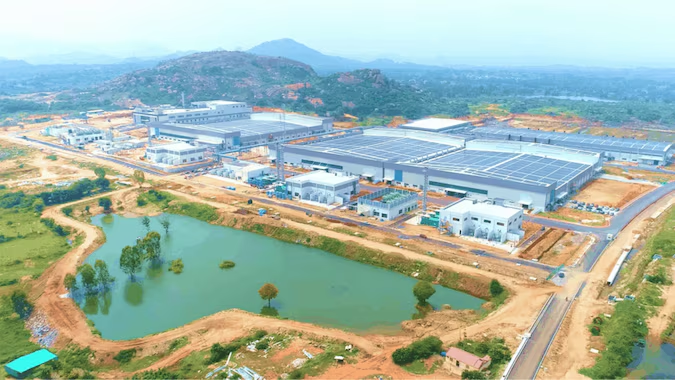


A crucial cog in Apple’s multi-billion-dollar strategy to move its primary device assembly footprint out of China has hit a massive regulatory roadblock. The Tamil Nadu Pollution Control Board (TNPCB) has issued a stern show-cause notice to Tata Electronics, threatening a forced shutdown and immediate power disconnection at its massive iPhone component plant in Hosur.
The regulatory escalation follows a comprehensive six-month investigation into mounting complaints from local agrarian communities, who allege that the factory’s wastewater management has ruined adjacent agricultural lands and drinking water wells.
The Investigation: Rainwater Ponds Used for Waste
The manufacturing facility—which employs thousands and produces the specialized structural back panels and enclosures for Apple’s global iPhone models—underwent five separate state inspections between December 2025 and May 2026.
According to the official three-page regulatory notice, state inspectors discovered that Tata Electronics had been discharging industrial wastewater directly into an on-site rainwater harvesting pond.
- The Contamination Loop: During periods of seasonal downpours, this internal reservoir overflowed, carrying toxic chemical residues into adjacent open lands.
- The Chemical Indicators: Laboratory analysis of samples pulled from the open wells of nearby farms revealed severe, elevated spikes in Biochemical Oxygen Demand (BOD), Chemical Oxygen Demand (COD), and Total Dissolved Solids (TDS), rendering the groundwater completely unsafe for crop irrigation or human consumption.
| Water Quality Parameter | Observed Levels in Tata Harvesting Pond | Standard Rainwater Baseline | Environmental Risk Level |
| Biochemical Oxygen Demand (BOD) | Critically Elevated | Near Zero | High (Depletes water oxygen) |
| Chemical Oxygen Demand (COD) | Severe Spikes | Minimal | High (Indicates chemical pollutants) |
| Total Dissolved Solids (TDS) | Strongly Elevated | Low | High (Salinizes soil and wells) |
Defiance of Previous Orders Triggers Closure Threat
What has particularly aggravated the Tamil Nadu government is Tata’s alleged failure to comply with prior warnings. The TNPCB revealed it had already flagged these exact drainage lapses in a directive dated December 23, 2025.
Because the latest round of mid-2026 inspections showed zero structural or corrective changes on the factory floor, the state regulator bypassed standard fines and moved directly to ultimate enforcement. The agency has given Tata Electronics a tight window to explain why its power lines should not be severed under local environmental protection acts.
Tata Group Responds with Independent Data
Faced with a devastating operational disruption, Tata Electronics has launched a robust legal and public defense. The corporation strongly disputes the state’s laboratory findings, asserting that its internal ecosystems operate with zero external leakage.
“Tata Electronics is committed to responsible business practices and protection of the environment and local communities,” a corporate spokesperson stated. “Immediately after hearing from the Tamil Nadu Pollution Control Board (TNPCB), we commissioned an independent analysis through an accredited laboratory. The independent study determined that we are in full compliance with all regulatory norms. We have conveyed our response to TNPCB accordingly.”
Apple’s Growing Pains in the Indian Subcontinent
The environmental showdown adds to a growing list of infrastructure and supply chain headaches that have challenged Apple’s aggressive expansion in India. The tech giant has set a target for India to manufacture 26% of all global iPhones, up from just 6% a few years ago.
However, achieving that scale has come with recurring friction. Tata’s Hosur complex was forced into a localized production halt following a massive structural fire, while assembly partner Pegatron faced similar disruptions due to a factory blaze. Furthermore, a major investigation revealed systemic hiring bias against married women at Foxconn’s main assembly plant in Chennai, forcing Cupertino to deploy permanent, on-site supply chain compliance auditors.
As the TNPCB reviews Tata’s independent laboratory data, the tech sector is watching closely. A full shutdown of the Hosur plant, even for a few weeks, would trigger an immediate component squeeze for iPhone assembly lines across Asia, exposing the fragile realities of moving high-velocity tech pipelines into fresh manufacturing corridors.