

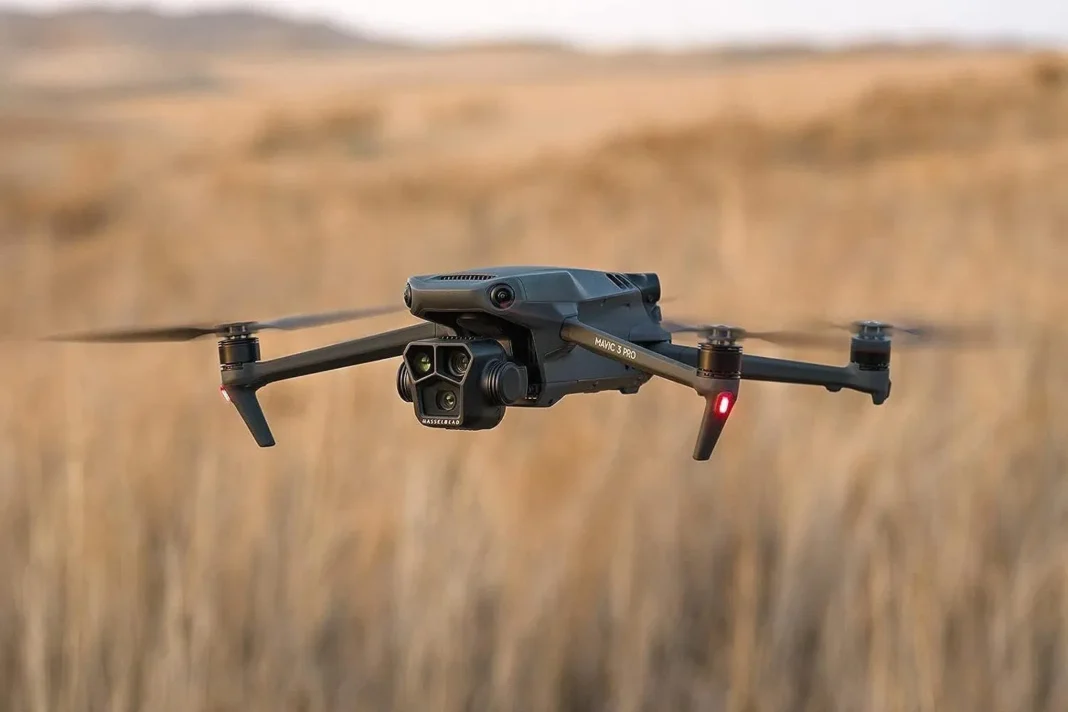
In a major push to establish India as a global drone hub, the Ministry of Civil Aviation has proposed a massive ₹1,800 crore incentive package for the domestic drone industry. The proposal, unveiled on March 17, 2026, aims to transition the sector from simple assembly to deep-tech manufacturing, significantly reducing the country’s dependence on imported components.
A New Chapter Beyond the Initial PLI
This new package is a substantial escalation from the original Production Linked Incentive (PLI) scheme, which had a modest outlay of ₹120 crore. The proposed ₹1,800 crore framework is designed to address the high capital requirements of “sunrise” industries.
Key features of the proposed incentive include:
- Two-Tier Subsidy Structure:
- CapEx Support: A 10–15% subsidy on capital expenditure for setting up new manufacturing units and R&D infrastructure.
- Output Incentives: A 10–15% subsidy linked to actual manufacturing turnover to help Indian drones compete with cheaper imports.
- Domestic Content Mandate: To qualify, manufacturers must ensure at least 50–60% domestic value addition, targeting critical sub-systems like flight controllers, motors, and sensors.
- Focus on MSMEs: Nominal eligibility thresholds are expected to remain for startups, ensuring the ecosystem benefits small-scale innovators alongside giants like IdeaForge and Garuda Aerospace.
Strategic Synergy: Namo Drone Didi and Defense
The manufacturing push is designed to feed into the government’s massive demand-side schemes. By localizing production, the government aims to lower the procurement costs for existing flagship programs.
| Scheme | 2026 Status | Impact of New Manufacturing Package |
| Namo Drone Didi | ₹1,261 Cr Outlay | Provides affordable, locally-made agricultural drones for 15,000 SHGs. |
| SVAMITVA | 3.28 Lakh villages surveyed | Accelerates mapping with higher-end indigenous sensors. |
| Defense (iDEX) | ₹7.85 Lakh Cr Budget | Ensures secure, “made-in-India” supply chains for surveillance UAVs. |
Why Now? The Global Context
The timing of the proposal is critical. With the ongoing US-Iran war disrupting global electronics supply chains, India is fast-tracking its self-reliance goals.
The “Drone Shakti” initiative, highlighted in the Union Budget 2026, has already simplified regulations, including a uniform 5% GST on drones. This new ₹1,800 crore package is the final fiscal piece needed to move the industry toward mass production.
Industry Impact
Market analysts expect the scheme to trigger a wave of fresh investment.
“This isn’t just about assembly anymore; it’s about building the brain of the drone in India. A ₹1,800 crore commitment gives us the long-term certainty needed to invest in chip-level R&D,” says Sanjeev Gupta, an industry lead at a top aerospace firm.
This report details how government-backed drone schemes are already creating technical leadership among women in rural India, serving as the primary demand driver for the new manufacturing incentives.