
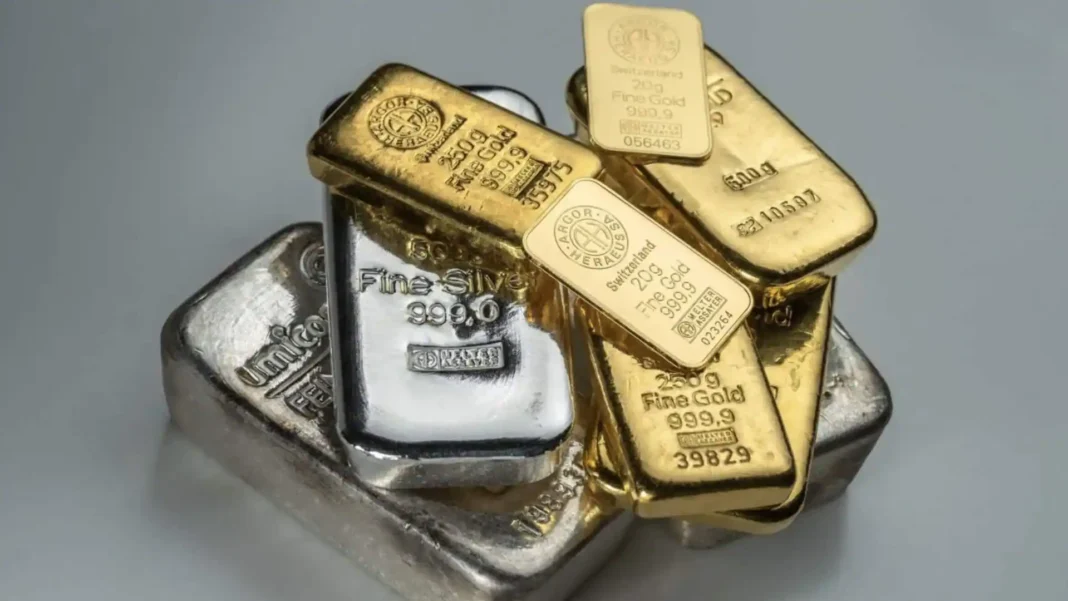
In a dramatic reversal of what had been a record-breaking month, Gold and Silver ETFs experienced a massive “flash crash” on Thursday, January 29, and Friday, January 30, 2026.
Several popular funds plunged by as much as 22% to 24% from their intraday peaks, wiping out trillions in market value in just minutes. The crash marks the most volatile 48-hour period for precious metals in history, following a month where silver had gained over 50%.
1. The “Carnage” in Numbers
The selloff hit silver-focused ETFs the hardest, as they had been carrying massive speculative premiums throughout January.
| ETF Name | One-Day Drop (at Peak) | Closing Price (Approx.) |
| Tata Silver ETF | -24.0% | ₹25.56 |
| Mirae Asset Silver ETF | -22.0% | Significant Volatility |
| Edelweiss Silver ETF | -22.0% | Significant Volatility |
| Nippon India Silver ETF | -20.0% | Significant Volatility |
| Nippon India Gold BeES | -14.0% | ₹138.70 |
In the international market, $3.4 trillion was wiped off the total value of above-ground gold in a single session, with prices swinging by as much as $500 per ounce in under an hour.
2. What Triggered the Crash?
The “perfect storm” that broke the rally was a combination of geopolitical de-escalation and shifts in U.S. monetary policy.
- The “Greenland Climbdown”: President Trump announced he would not use military force to annex Greenland and reached an outline of a deal with NATO. This immediately cooled the “safe-haven” demand that had pushed gold to record highs.
- The “Hawkish” Fed Chair: Reports surfaced on January 30 that Kevin Warsh—viewed as a hawkish economist who favors smaller Fed balance sheets—is the frontrunner to replace Jerome Powell as Fed Chair.
- Speculative Premium Collapse: In India, silver ETFs had been trading at a massive $13 per ounce premium over global prices due to rumors of a budget import duty hike. When the global selloff began, this domestic “froth” evaporated instantly.
- Tech Rout Spillover: A 12% crash in Microsoft shares (following an AI-related earnings miss) forced many institutional investors to liquidate precious metal positions to cover margin calls in equities.
3. Record Monthly Gains Masked by Volatility
Despite the brutal 22% correction, both metals are still on track for historic monthly performances.
- Silver: Even after the crash, silver remains up over 50% for January 2026, its strongest monthly showing since 1979.
- Gold: The yellow metal is headed for its best monthly gain since 1980, having surged nearly 25% earlier in the month before the retreat to the $5,100–$5,200 range.
4. Is This a Buying Opportunity?
Analysts are divided on whether the crash signals a trend reversal or a healthy “clearing of the decks.”
- The Bull Case: J.P. Morgan and UBS maintain a bullish outlook, with price targets for gold still aimed at $6,000/oz by late 2026, citing persistent global debt and de-dollarization.
- The Bear Case: Analysts at Julius Baer warn that the “peak euphoria” has passed, and silver remains vulnerable due to its extreme price-to-industrial-utility ratio.
Conclusion: A “Liquidity Event” for the History Books
The January 2026 gold and silver crash serves as a stark reminder of the risks of “chasing a parabolic rally.” While the fundamental reasons for holding precious metals (inflation, debt, and geopolitics) haven’t vanished, the 22% drop has punished late-arriving retail investors who entered at the peak. As the market looks toward the Indian Union Budget on February 1, the focus will be on whether the government actually delivers the import duty changes that speculative traders were betting on.