

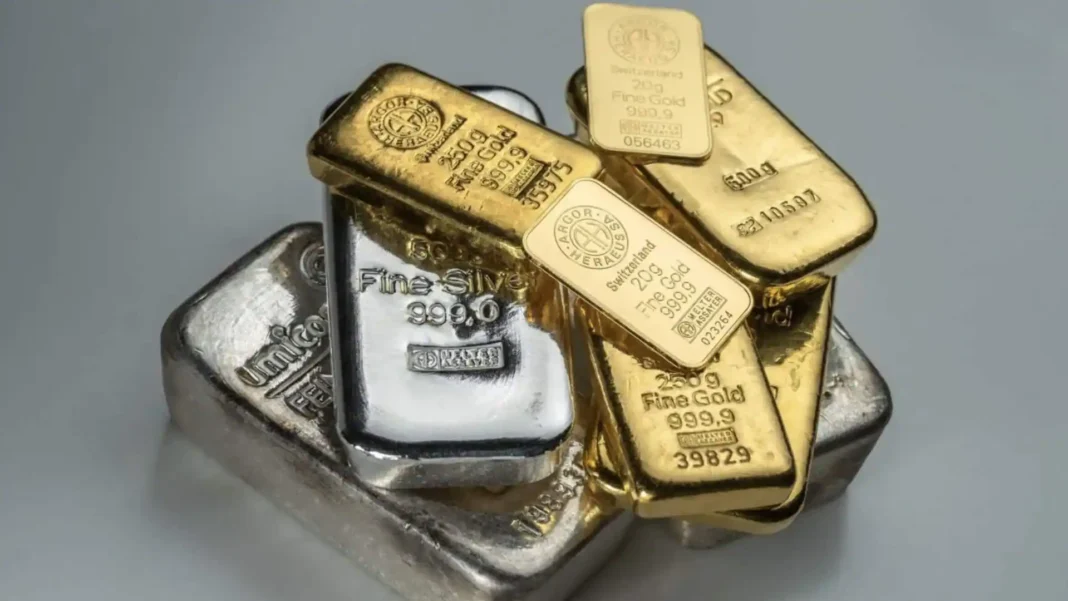
In a historic display of volatility, the combined market capitalization of gold and silver erased a staggering $10.1 trillion in just three trading sessions ending February 2, 2026.
This “Precious Metals Meltdown” saw gold drop over 20% from its peak, while silver underwent a near-total collapse, crashing 40% in the same period. To put the scale into perspective, the value lost in these three days is roughly four times the entire market cap of the global cryptocurrency market.
1. The Magnitude of the Wipeout
The destruction of wealth was driven by record-breaking intraday drops on Friday, January 30, and Monday, February 2.
| Metal | Market Cap Lost (3 Days) | Peak to Trough (%) | Comparison |
| Gold | $7.4 Trillion | ~21% | 5x the entire market cap of Bitcoin |
| Silver | $2.7 Trillion | ~39.5% | Equal to the total crypto market cap |
| Total | $10.1 Trillion | — | ~10% of Global GDP |
2. The “Perfect Storm” of Triggers
The crash wasn’t caused by a single event, but a rapid-fire sequence of macroeconomic and technical shocks:
- The “Warsh Shock”: On Friday, President Trump nominated Kevin Warsh as the next Federal Reserve Chair. As a known “inflation hawk,” his appointment signaled that the era of cheap money and aggressive rate cuts was over, causing the US Dollar Index (DXY) to skyrocket above 97.
- Margin Hike “Noose”: The CME Group (globally) and MCX (in India) raised margin requirements for silver and gold multiple times in a single week. This forced leveraged traders to either dump their positions or provide massive amounts of cash, triggering a “liquidity trap.”
- The “Blow-Off Top”: Technical indicators like the RSI had hit extreme levels (above 90), suggesting the market was historically overbought. When the first big sellers emerged, it triggered a cascade of algorithmic “stop-loss” orders.
- Budget Speculation (India): In the domestic market, rumors of a customs duty cut on bullion in the February 1 Union Budget led Indian jewelers and investors to stay on the sidelines, removing a key source of physical demand.
3. Silver: The Epicenter of the Crash
Silver, often called “gold on steroids,” lived up to its reputation for volatility.
- Intraday Collapse: On Friday, January 30, silver suffered its worst daily fall in history, crashing nearly 30% in a single session.
- From ₹4 Lakh to ₹2.65 Lakh: In India, silver futures on the MCX nosedived from a lifetime high of ₹4,20,048 per kg on Thursday to hit the lower circuit at ₹2,65,652 by Sunday’s special session.
- Speculative Flush: Analysts noted that heavy participation by Chinese speculators and the unwinding of “short squeeze” bets accelerated the silver rout far beyond that of gold.
4. Impact on ETFs and Retail Investors
The crash rippled through the financial system, hitting passive investors particularly hard:
- Circuit Breakers: The Bombay Stock Exchange (BSE) was forced to impose 20% circuit limits on gold and silver ETFs as they lost nearly a quarter of their value in minutes.
- Margin Calls: Retail traders on the MCX faced a “Black Sunday” as prices hit lower circuits, preventing them from exiting their positions while their account balances turned negative.
Conclusion: A Structural Reset
While the $10 trillion wipeout is catastrophic for short-term traders, many institutional analysts, including those from Goldman Sachs and Mirae Asset, argue that the long-term bull thesis remains intact. They view this as a “structural reset” that has flushed out excessive leverage. However, with Kevin Warsh at the Fed’s helm and the US dollar regaining its strength, the “easy money” era of precious metals has clearly come to a violent end.