

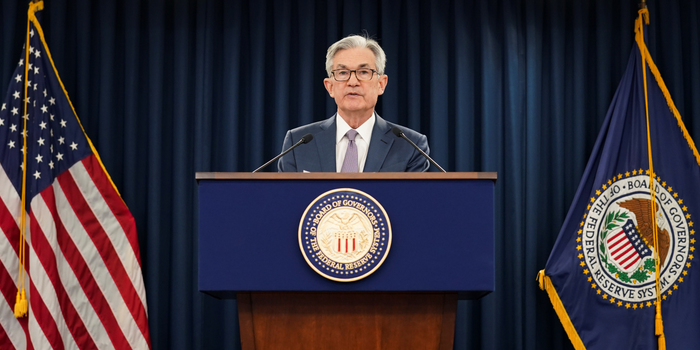
In a widely anticipated decision, the Federal Reserve kept its benchmark interest rate unchanged on Wednesday, January 28, 2026, following its first policy meeting of the year.
The Federal Open Market Committee (FOMC) voted 10-2 to maintain the federal funds rate in the target range of 3.5% to 3.75%. This marks a pause after three consecutive rate cuts in the latter half of 2025 (September, October, and December) that lowered the rate by a total of 75 basis points.
1. The Rationale: Data-Driven Patience
The Fed’s decision to “stand pat” was driven by a mix of resilient economic growth and persistent inflation concerns:
- “Solid” Economic Growth: The FOMC upgraded its description of the economy from “moderate” to “solid,” noting resilient consumer spending and business investment.
- Inflation & Tariffs: Core inflation remains above the 2% target (roughly 3.0% in December). Chair Jerome Powell noted that recent price increases are largely driven by one-time tariff effects on goods rather than excessive demand.
- Labor Market Stabilization: While job gains have slowed (averaging 22k over three months), the Fed noted signs that the labor market is “stabilizing” rather than deteriorating.
2. The Dissenters: A Divided Committee
For the fifth straight meeting, the FOMC was not unanimous. Two members cast a “dovish” dissent:
- Christopher Waller & Stephen Miran: Both voted in favor of a 25-basis-point cut, arguing that the neutral rate might be lower than currently believed and that further easing was necessary to protect the labor market.
3. The Political Context: Fed Independence
The meeting took place under unprecedented political scrutiny. Chair Powell addressed several “external” pressures during his press conference:
- Trump Pressure: President Trump has repeatedly called for aggressive rate cuts, criticizing the current 3.5% level as too high.
- Criminal Investigation: Powell declined to comment on the ongoing Department of Justice investigation into himself regarding the renovation of the Fed’s headquarters, a probe he previously characterized as a “pretext” to influence policy.
- Advice for Successor: With his term ending on May 15, 2026, Powell’s primary advice to his yet-to-be-named successor was to “stay out of elected politics” and maintain the bank’s independence.
4. Market Impact & Future Outlook
Markets reacted with a “wait-and-see” attitude, as the pause was already 97% priced in by the CME FedWatch tool.
| Asset | Reaction (Post-Announcement) |
| S&P 500 / Nasdaq | Remained near record highs; closed flat to slightly positive. |
| US Dollar | Remained firm as “higher-for-longer” expectations were reinforced. |
| Gold & Silver | Prices remained elevated, though the Fed stated it does not take a “strong signal” from their rise. |
| Indian Markets | Faced mild pressure as near-term rate cut hopes faded. |
Conclusion: The “June” Target
The Fed has signaled that its next move is no longer a question of “when,” but “what breaks first.” While the current 3.5%–3.75% range is viewed as “loosely neutral,” the futures market currently places the highest probability for the next rate cut in June 2026—coinciding with the first meeting of the new, post-Powell leadership.