

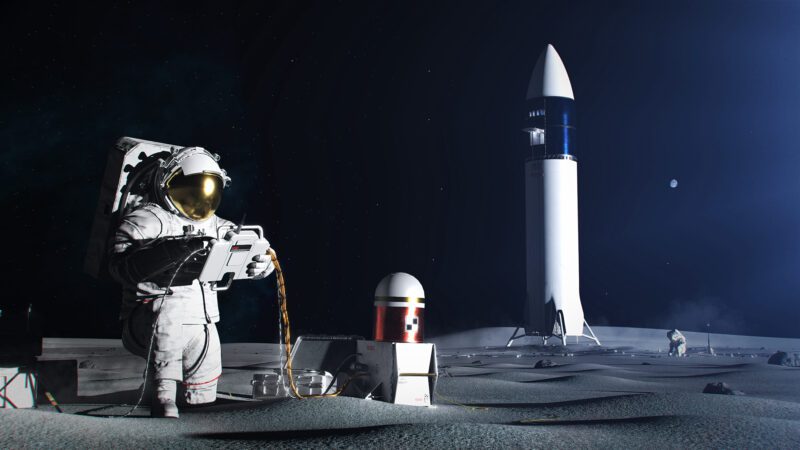
In a significant strategic pivot announced this week (February 8–9, 2026), Elon Musk confirmed that SpaceX is now prioritizing the construction of a “self-growing city” on the Moon over its long-standing Mars ambitions.
Musk cited the Moon’s proximity and logistical advantages as the primary reasons for this “recalibration.” While he previously dismissed the Moon as a “distraction,” he now argues that the ability to launch every 10 days (compared to every 26 months for Mars) allows for much faster iteration.
Key Highlights of the “Moon City” Plan
- Timeline: Musk aims to have the city established within 10 years (by 2036).
- The “Iteration” Advantage: The Moon’s 2-day trip time allows for rapid development, whereas Mars requires a 6-month journey and specific planetary alignments.
- Strategic Shift: SpaceX has reportedly informed investors that lunar missions are the near-term priority, with an uncrewed Moon landing targeted for March 2027.
- Technological Synergies: The plan follows the recent $1 trillion merger/acquisition of xAI by SpaceX. Musk intends to use the Moon as a base for energy-efficient, space-based AI data centers.
Comparing the Moon vs. Mars Timelines
| Feature | Lunar City (The New Focus) | Martian City (The Parallel Goal) |
| Launch Frequency | Every 10 days | Every 26 months |
| Travel Time | ~2 days | ~6 months |
| City Completion | < 10 years | 20+ years |
| Primary Risk | China’s lunar progress | Survival without Earth resupply |
Why the Change of Heart?
Musk’s “overriding priority” has shifted toward “securing the future of civilization” as quickly as possible. He expressed concern that a catastrophe on Earth could cut off resupply lines; because a Moon base can be made self-sustaining faster, it serves as a more immediate “insurance policy” for humanity.
“SpaceX will also strive to build a Mars city and begin doing so in about 5 to 7 years, but the overriding priority is securing the future of civilization and the Moon is faster.” — Elon Musk on X, February 2026