
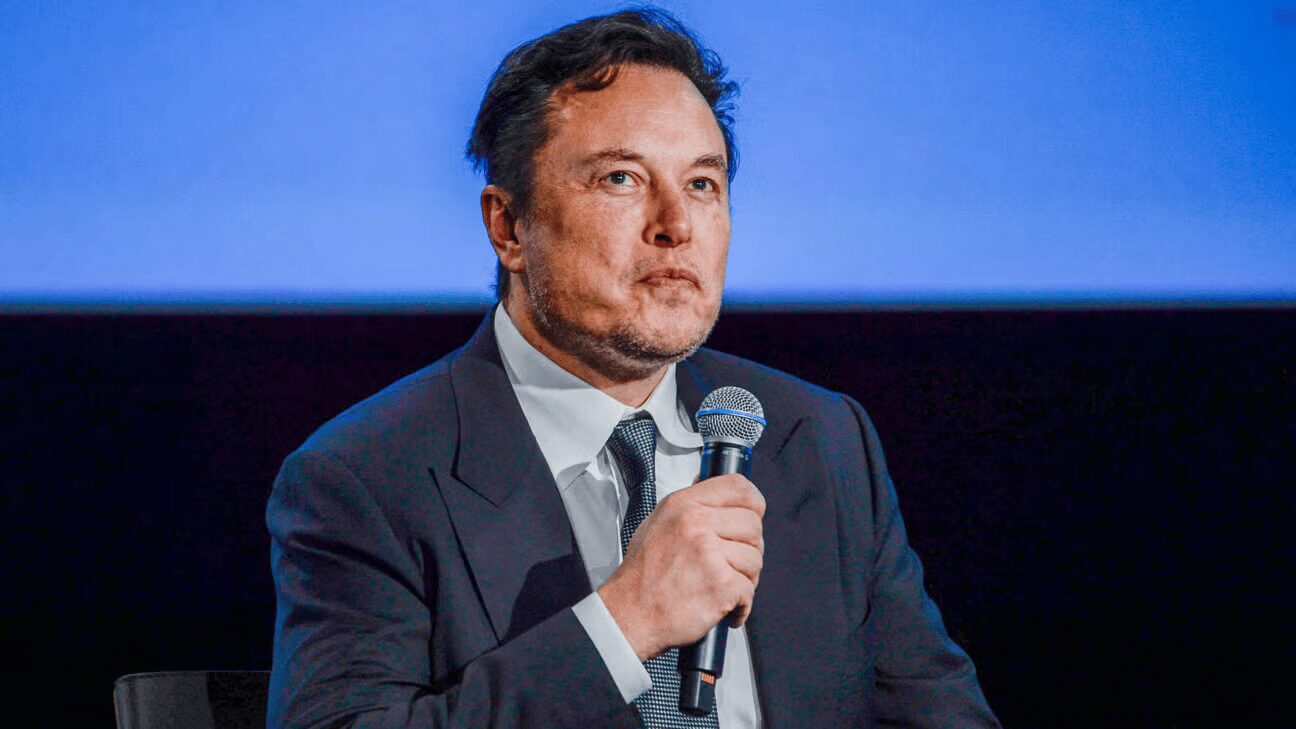
During the wide-ranging discussion, Diamandis—himself a Harvard Medical School graduate—asked Musk directly if young people should still consider a career in medicine. Musk’s response was characteristically blunt: “Yes, pointless.8 I think that applies to any educational field.”
The Three-Year Timeline
Musk argued that human doctors are limited by “slow” biological learning and physical fatigue.
- Precision at Scale: Musk claims that by 2029, Tesla’s Optimus robots will perform surgeries with a level of precision that no human hand can match, citing current robotic LASIK as a primitive example of this shift.
- The “Triple Index” Growth: Musk attributes this speed to three concurrent exponential curves: advancements in AI software, semiconductor power, and electromechanical sophistication.
- Universal Access: He predicts that once robotic surgeons are deployed at scale, every person on Earth will have access to healthcare superior to what “the president receives right now.”
Skepticism from the Medical Community
While tech enthusiasts are cheering the vision, medical experts and bioethicists have labeled Musk’s three-year timeline as “not credible.”
“Progress in robotic surgery has been slow.14 It is hardly likely that robots will outperform humans in three years in all areas—cardiac, brain, orthopedics, plastic, etc.”
— Professor Arthur Caplan, Bioethicist, NYU Grossman School of Medicine.
The “Autonomous Driving” Parallel
Critics have pointed out a significant flaw in Musk’s optimism: Full Self-Driving (FSD).
- Experts argue that if AI still struggles to navigate a 2D street with predictable lanes and traffic lights, navigating the unpredictable, bleeding, and highly variable 3D environment of the human body is an order of magnitude more difficult.
- Unlike a car, “living tissue” has no standardized map, and complications require “real-time artistic judgment” that current AI architectures lack.
The Evolving Medical Curriculum
Despite the controversy, educators admit that the nature of medical school must change. In 2026, many universities are already pivoting toward a “hybrid” model:
| Old Medical Training | 2026+ “AI-Era” Training |
| Focus on Rote Memorization | Focus on AI Orchestration |
| Manual Surgical Dexterity | Robotic Supervisory Skills |
| Standardized Diagnostics | Complex Case Exception Handling |
| Doctor as “Sole Authority” | Doctor as “Empathy & Ethics” Lead |
Conclusion: A Human System
Musk’s “pointless” comment misses a fundamental truth: medicine is a human system built on legal and ethical responsibility. Even with “perfect” robot surgeons, human doctors will still be required to decide when surgery is appropriate, manage unexpected emergencies, and provide the comfort and empathy that a machine cannot.
While medical school isn’t becoming obsolete, it is certainly entering its most transformative era. As one critic noted, “A robot might be able to sew a stitch perfectly, but it can’t hold a patient’s hand when they get bad news.”