

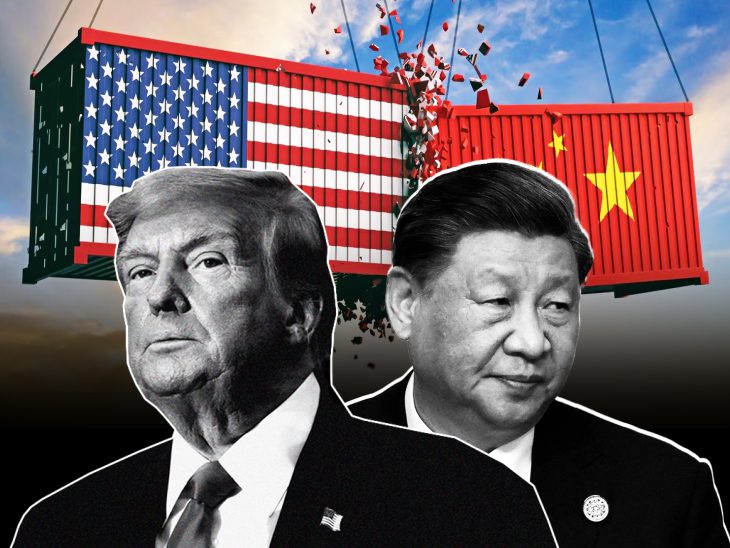
For years, China was the primary financier of the American deficit. However, the latest Treasury International Capital (TIC) data reveals that Beijing is no longer interested in “holding the bag.” With holdings dropping by $6.1 billion in a single month (November 2025), China now sits firmly behind Japan and the United Kingdom in the hierarchy of U.S. creditors.
The Numbers at a Glance
The decline is not just a monthly blip but a sustained structural retreat from the U.S. dollar.
- Current Holding: $682.6 Billion (November 2025 data, released January 2026).
- Peak Holding: $1.32 Trillion (November 2013).
- Total Reduction: A 48% decrease from its all-time peak.
- Comparison: While China sells, Japan (the top holder) increased its stake to $1.2 trillion, and the UK grew its pool to $888.5 billion.
Why is China Dumping U.S. Treasuries?
Analysts point to a “triple threat” of reasons behind this aggressive sell-off:
- Weaponization of Finance: Following the freezing of Russian reserves in 2022, Beijing has prioritized “de-risking” its assets. The fear of being subject to similar sanctions in a potential conflict over Taiwan has made dollar-denominated assets look like a liability.
- U.S. Debt Sustainability: With U.S. national debt reaching record highs and annual interest payments crossing the $1 trillion mark in 2026, Chinese economists have characterized the accumulation as a “Ponzi-like” dynamic.
- Monetary Independence: Ongoing debates regarding the independence of the Federal Reserve and high fiscal deficits have weakened global confidence in the “risk-free” status of Treasuries.
The Pivot to Gold: 14 Months of Buying
As China sheds U.S. debt, it is aggressively building a “Gold Shield.”
- 14-Month Streak: The People’s Bank of China (PBOC) has increased its gold reserves for 14 consecutive months.
- Current Reserves: As of December 31, 2025, China holds 74.15 million ounces of gold.
- Strategic Stability: Gold is viewed as the ultimate store of value that lacks “counterparty risk”—meaning it cannot be canceled or frozen by a foreign government.
| Metric | US Treasuries (China) | Gold Reserves (China) |
| Trend | Descending (17-Year Low) | Ascending (Record Highs) |
| Current Value | $682.6 Billion | 74.15 Million Ounces |
| Primary Goal | Yield and Liquidity | Safety and Sovereignty |
Economic Implications for 2026
This shift is ushering in a “two-speed” global financial system. While the U.S. remains the world’s most liquid market, it is becoming increasingly reliant on private sector buyers and allies like Japan to fund its deficit as its largest rival exits.
For China, the “windfall” from its record $1.2 trillion trade surplus is no longer flowing back into the U.S. Treasury. Instead, it is being funneled into:
- Gold and Physical Commodities
- Overseas Equity Investments
- Private Securities in Emerging Markets
Conclusion
The news that China’s holdings have hit a 17-year low marks the end of an era of mutual financial dependence. As Beijing optimizes its $3.36 trillion forex reserve for a “multipolar” world, the U.S. Treasury must now find new, more expensive ways to attract the capital it once took for granted.