

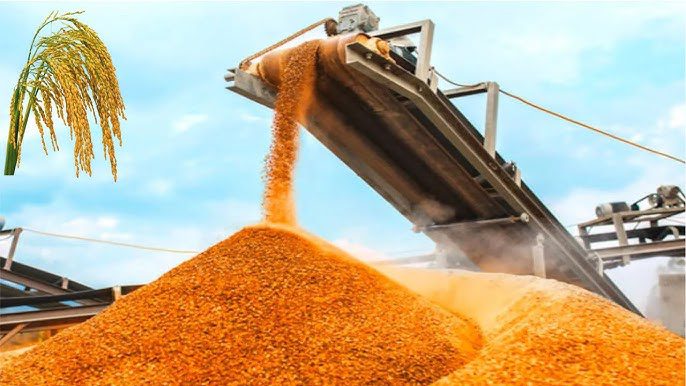
In a landmark achievement for global food security, Chinese scientists have officially developed the world’s first clone-hybrid rice. This breakthrough marks the end of a decades-long search for the “Holy Grail” of agriculture: apomixis.
By creating a hybrid rice that can clone its own seeds, researchers have paved the way to slash seed costs by up to 99% and potentially double global rice production.
The Breakthrough: What is Clone-Hybrid Rice?
Traditionally, hybrid rice is known for its “hybrid vigor” (heterosis)—a phenomenon where the offspring of two different parent varieties produces significantly higher yields. However, there has always been a major catch: genetic segregation.
When a farmer plants seeds from a traditional hybrid harvest, the next generation loses its superior traits. This forces farmers to buy expensive new hybrid seeds every single year.
The Solution: Synthetic Apomixis
The new variety uses a process called synthetic apomixis. This allows the plant to bypass the traditional reproductive cycle to ensure high-yield traits remain permanent:
- Skip Fertilization: The seeds develop asexually, meaning they do not need pollen from another plant.
- Lock Genetic Traits: The offspring are exact genetic clones of the high-yield parent.
- Self-Reproduce: Farmers can save and replant their own seeds indefinitely without losing yield quality.
Key Technical Achievements
| Feature | Details |
| Technology Used | CRISPR-Cas9 Gene Editing & “Fix8” System |
| Key Gene Target | BBM1 and MiMe (Mitosis instead of Meiosis) |
| Cloning Efficiency | Over 99% accuracy in genetic replication |
| Seed-Setting Rate | Commercial viability achieved for mass production |
Why This Matters: Economic and Global Impact
The implications of “one-line” hybrid rice are staggering, particularly for developing nations and small-scale farmers.
1. Slashing Production Costs
In many regions, hybrid rice seeds can cost significantly more than conventional seeds due to the labor-intensive process of cross-breeding. The new clone-hybrid technology is expected to drop the price of high-yield seeds by nearly 95%, effectively removing the financial barrier to high-yield farming.
2. Solving Global Hunger
Hybrid rice has already shown it can produce yields significantly higher than traditional varieties. By making these seeds self-replicating, the technology ensures that even the most remote farmers can maintain “super-rice” yields year after year without needing to buy new stock.
3. Climate Resilience
The technology isn’t just about yield; it’s a genetic “lock.” Scientists can now permanently embed traits like drought tolerance, pest resistance, and heat stability into the plant. Because the plant clones itself, these protective genes are passed down perfectly through every generation, protecting crops against a changing climate.
The Legacy of Yuan Longping
This achievement is the fulfillment of a lifelong dream for the late Yuan Longping, the “Father of Hybrid Rice.” Before his passing, Yuan encouraged his students to pursue the “one-line” system to make hybrid rice accessible to the entire world. With the successful field trials now yielding stable results, that vision of an “endless harvest” is finally a reality.
Future Outlook
As we move through 2026, these apomictic rice varieties are moving from the lab to large-scale field trials across various climates. This technology is expected to be shared with international partners, including nations across Southeast Asia and Africa, within the next few years, potentially ending the cycle of seed dependency for millions of farmers worldwide.