
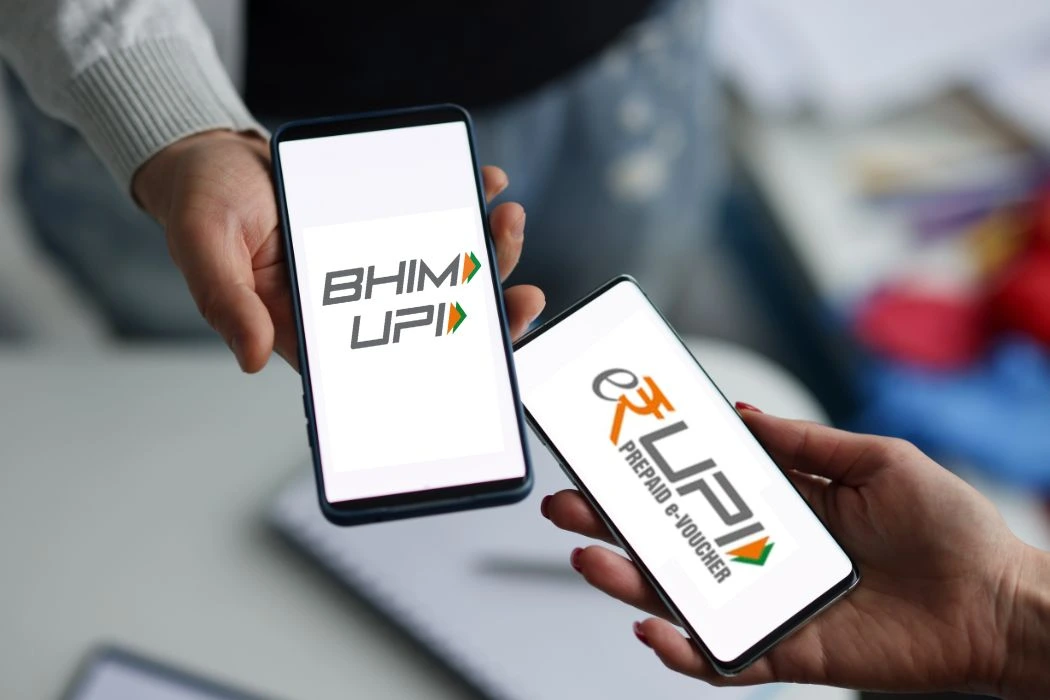
In a significant shift within India’s digital payments landscape, the government-backed BHIM (Bharat Interface for Money) app officially overtook CRED in UPI transaction volumes in December 2025 and sustained that lead through January 2026.
This “volume flip” highlights a divergence in strategy: BHIM is winning on mass-market, small-ticket adoption, while CRED remains the dominant leader in high-value, premium transactions.
The Volume Leaderboard (January 2026)
According to the latest NPCI data released in February 2026, BHIM has climbed to become the sixth-largest UPI player by volume, capitalizing on a 5x growth surge.
| App | Transaction Volume (Jan 2026) | Market Share (Vol) |
| PhonePe | 9.91 Billion | 45.7% |
| Google Pay | 7.23 Billion | 33.3% |
| Paytm | 1.66 Billion | 7.7% |
| Navi | 709 Million | 3.3% |
| super.money | 298 Million | 1.4% |
| BHIM | 172 Million | 0.8% |
| CRED | 157 Million | 0.7% |
Volume vs. Value: A Tale of Two Apps
While BHIM has more “taps” (transactions), CRED still moves significantly more “money” (value). This reflects their polar-opposite user bases:
- BHIM (Mass Market): Focuses on low-value Person-to-Merchant (P2M) transactions. Approximately 83% of BHIM transactions are below ₹200. It is the “everyman’s” app, deeply penetrated in Tier II and Tier III cities.
- CRED (Premium Niche): Targets high-net-worth individuals primarily for credit card bills and premium rent payments. In January 2026, CRED’s transaction value was ₹58,841 crore—nearly 3x higher than BHIM’s ₹22,026 crore, despite having fewer users.
Why BHIM is Surging Now
The sudden acceleration of the government app is no accident. It is the result of a massive structural and policy push:
- NPCI Restructuring: In August 2024, BHIM was spun off into a dedicated entity, NPCI-BHIM Services Ltd (NBSL), allowing it to move with the speed of a private startup.
- App Overhaul: A “Version 2.0” revamp in 2025 drastically improved the user interface (UI) and reduced transaction failures, making it competitive with private apps.
- The “Incentive” Effect: The Ministry of Finance’s incentive scheme for low-value BHIM-UPI transactions (budgeted at over ₹8,000 crore) has successfully motivated millions of first-time users in rural clusters to skip cash.
- Security Trust: Amidst rising concerns over “foreign-owned” app dominance, the government has actively promoted BHIM as the “sovereign” and most secure choice for Indian citizens.
The 30% Market Cap Shadow
The rise of BHIM and other mid-tier players like Navi and Flipkart’s super.money is being closely watched as the December 31, 2026 deadline approaches. On that date, NPCI’s 30% volume cap for third-party apps (aimed at curbing the duopoly of PhonePe and Google Pay) is scheduled to finally take effect.