

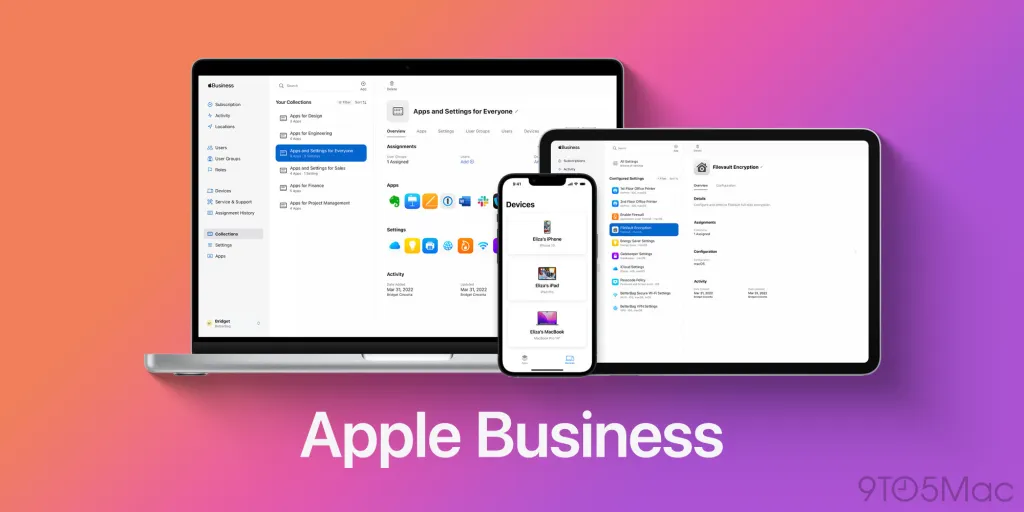
In its most aggressive move to capture the small-to-midsize business (SMB) market, Apple officially announced “Apple Business” on March 24, 2026. This new unified platform is designed to be a “single pane of glass” for companies to manage their entire Apple footprint—from setting up an employee’s first Mac to managing how the brand appears in Apple Maps.
Launching globally on April 14, 2026, the platform effectively replaces and consolidates Apple Business Essentials, Apple Business Manager, and Apple Business Connect into one streamlined experience.
1. The Core Pillar: “Zero-Touch” IT
At the heart of Apple Business is a revamped Mobile Device Management (MDM) suite built directly into the OS.
- Blueprints: Administrators can now use “Blueprints” to pre-configure groups of devices with specific apps, Wi-Fi settings, VPNs, and security policies.
- Zero-Touch Deployment: When a company buys a device through Apple or an authorized reseller, the employee simply unboxes it and signs in with their Managed Apple Account. All work tools are installed automatically.
- Managed Apple Accounts: This feature uses “cryptographic separation” to keep work data and personal data strictly apart on the same device, ensuring privacy for employees and security for the firm.
2. Beyond Hardware: Productivity & Branding
Apple is expanding its services to compete directly with Google Workspace and Microsoft 365 in the SMB sector.
- Custom Domain Email: For the first time, businesses can set up and manage professional email (e.g.,
[email protected]), shared calendars, and a company directory directly through Apple’s infrastructure. - Brand Profiles: Companies can manage their name, logo, and “Place Cards” consistently across Apple Maps, Wallet, and iCloud Mail.
- Maps Ads (U.S. & Canada): Coming this summer, businesses can bid for ad placements in Apple Maps. These ads will appear at the top of search results and in a new “Suggested Places” section, using a privacy-first approach that doesn’t track individual users across apps.
3. Pricing and Transition
Apple is positioning the base platform as a free service for existing users of its legacy business tools, with optional paid tiers for expanded support.
| Feature / Service | Pricing (Estimated) | Availability |
| Apple Business (Core) | Free | Global (200+ Countries) |
| iCloud for Business | Starts at $0.99/mo (up to 2TB) | Optional Upgrade |
| AppleCare+ for Business | $6.99/mo (Device) or $13.99/mo (User) | Optional Upgrade |
| Maps Advertising | Auction-based Bidding | Summer 2026 (US/Canada) |
4. Why Now? The “Service Era”
The launch of Apple Business signals Apple’s intent to lock in corporate users who have traditionally relied on third-party MDM vendors or mixed ecosystems. By offering a “first-party” solution for email and device management, Apple is betting that the ease of a unified dashboard will outweigh the flexibility of third-party tools for the world’s millions of small businesses.
“Apple Business is a significant leap forward in our commitment to helping companies of all sizes run on Apple,” said Susan Prescott, Apple’s VP of Enterprise Marketing. “We’ve unified our strongest offerings into one simple, secure platform.”