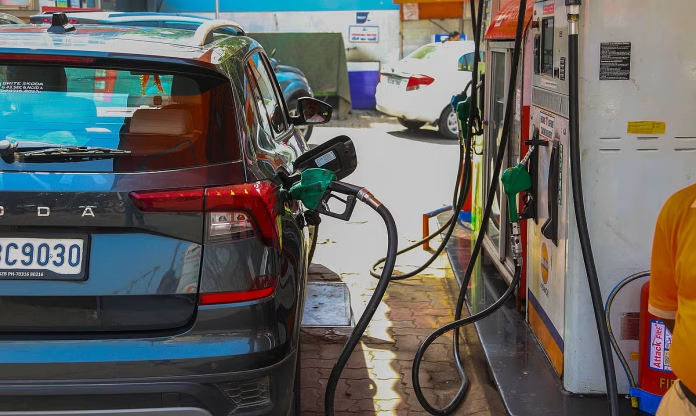


In a major hit to consumer pockets, state-run oil marketing companies (OMCs) have announced another sharp upward price revision. Retail prices of petrol and diesel have been hiked by an average of ₹2.80 per litre across the country, effective Monday, May 25, 2026.
This marks the fourth fuel price increase in less than two weeks. Since state-owned fuel retailers (IOCL, BPCL, and HPCL) broke their long-standing pricing freeze on May 15, cumulative fuel rates have skyrocketed by nearly ₹7.50 per litre across India.
1. New Fuel Architecture Across Indian Metros
Because retail fuel rates are heavily subject to local state Value Added Tax (VAT) brackets and regional freight handling fees, the absolute pump impact varies significantly by city. Following the latest round of hikes, petrol has officially breached the ₹100 per litre threshold in the national capital:
| Metro City | New Petrol Price (per Litre) | New Diesel Price (per Litre) | Exact Today’s Hike (Avg) |
| New Delhi | ₹102.12 (Breached ₹100 mark) | ₹95.20 | Petrol +₹2.61 | Diesel +₹2.71 |
| Mumbai | ₹111.21 | ₹97.83 | Petrol +₹2.72 | Diesel +₹2.81 |
| Kolkata | ₹113.51 | ₹99.82 | Petrol +₹2.87 | Diesel +₹2.80 |
| Chennai | ₹107.77 | ₹99.55 | Petrol +₹2.46 | Diesel +₹2.57 |
Outside the top four metros, the pricing pressure is even steeper due to internal state logistics. Cities like Jaipur saw a massive localized jump of ₹3.51 to hit ₹113.35 per litre for petrol, while Hyderabad recorded some of the highest base rates in the country, with petrol climbing to ₹115.73 per litre and diesel reaching ₹103.82.
2. The Macro Variable: Strait of Hormuz Blockade
The back-to-back fuel shocks are a direct consequence of the escalating West Asia conflict. The complete blockading of the Strait of Hormuz—a critical global maritime artery that channels nearly one-fifth of the world’s daily petroleum supply—has triggered an unprecedented global energy crunch.
This regional bottleneck sent the Indian Crude Basket soaring past $114 per barrel earlier this month. Coupled with a weaker rupee that heavily inflates U.S. dollar-denominated import values, Indian OMCs were reportedly absorbing immense losses of nearly ₹1,000 crore per day. Passing on these costs in a phased manner has become a mathematical necessity for the companies to remain financially viable.
A Note of Hope: While consumers are currently absorbing the blow, global oil markets began cooling on Monday following reports that the United States and Iran have finalized a framework to de-escalate the conflict. If the diplomatic deal holds and shipping corridors reopen, analysts expect international benchmarks to recede, paving the way for eventual retail price rollbacks in the second half of June.
3. Compounding Downstream Inflation Concerns
With liquid fuel costs climbing over ₹7.50 in a 10-day span alongside parallel hikes in commercial LPG and CNG networks, economists warn that a broader inflationary spillover is inevitable:
- Freight & Logistics Shock: The All India Motor Transport Congress has voiced deep concern, noting that diesel is the primary overhead cost for commercial trucking. Higher pump rates will immediately translate into steeper freight tariffs.
- Essential Commodity Spillover: Retail supply chain specialists predict that increased intra-city transport costs will show up on supermarket and local market shelves within weeks, pushing up the price of fresh produce, milk, and daily fast-moving consumer goods (FMCG).