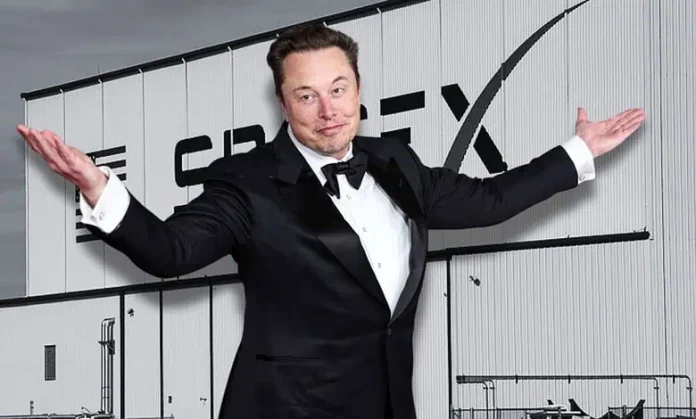


Just days after rewriting Wall Street history with the largest initial public offering (IPO) ever executed, SpaceX (ticker: SPCX) has extended its parabolic run. In overnight and early morning trading sessions, the stock broke through the $220-per-share mark, launching its market capitalization to a staggering $2.9 trillion.
The vertical surge places Elon Musk’s aerospace, satellite infrastructure, and AI data firm within striking distance of the world’s most valuable companies, sitting just an estimated $100 billion away from surpassing Microsoft.
The Velocity: Outpacing Day-One Baselines
The rapid approach to $2.9 trillion represents an extreme acceleration from the stock’s formal market debut on Thursday evening, June 12, 2026.
- The IPO Anchor: Underwriters led by Goldman Sachs originally priced the 555.6 million Class A shares at $135 each, projecting a baseline public valuation of $1.77 trillion.
- The Debut Pop: Shares opened Friday’s regular session at $150 and closed at $160.95, locking in an immediate 19% first-day gain and cementing an initial $2.1 trillion market cap.
- The Overnight Extension: Heavy institutional accumulation and index-inclusion tracking funds fast-tracking SPCX into major benchmarks drove the subsequent leg up. The move past $220 represents an approximate 63% premium over the initial offer price in less than 72 hours of active trading.
Wall Street Breakdown: The Corporate Heavyweights
The rapid asset inflation has completely reshuffled the upper echelons of the global corporate leaderboard.
| Public Corporation | Realized Market Capitalization | Core Modern Revenue Anchor |
| Microsoft | ~$3.00 Trillion | Enterprise cloud, Office ecosystem, and Azure AI |
| SpaceX (SPCX) | $2.90 Trillion | Starlink broadband, launch dominance, orbital AI data fabric |
| Nvidia | ~$2.80 – $2.95 Trillion | Frontier hardware architectures and data center chips |
Index Buying and Momentum Multipliers
While retail trading platforms reported record-breaking turnover for the debut—with individual buying volume outstripping Nvidia by more than three times—the transition from $2.1 trillion to $2.9 trillion is heavily structured by institutional mechanics.
Because of the sheer size and liquidity of the $75 billion capital raise, global index providers including Nasdaq, FTSE, and MSCI have fast-tracked SPCX for automated inclusion into their core benchmarks. This mechanism forces passive mutual funds, pension systems, and exchange-traded funds (ETFs) to systematically buy up massive blocks of outstanding shares regardless of valuation metrics, adding an artificial, high-velocity demand multiplier to the stock’s upward momentum.
The explosive multi-day valuation expansion has also fundamentally shifted Elon Musk’s personal capital ledger. Holding a controlling 42% equity stake in the newly public firm, the post-IPO rally has pushed the value of his SpaceX shares alone past $1.2 trillion. When combined with his $280 billion holding in Tesla, the historic public listing has officially secured Musk’s position as the world’s very first trillionaire.