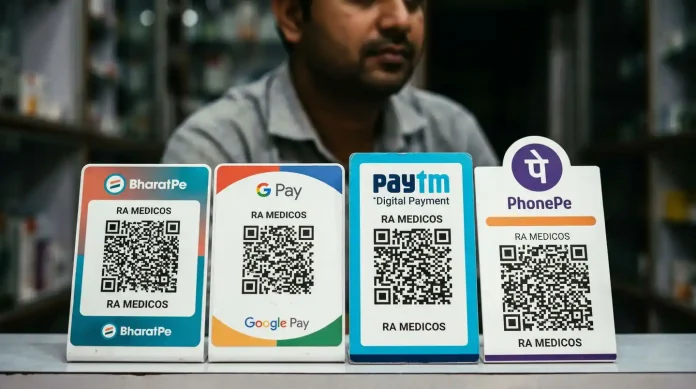


In a milestone shift for India’s digital payments landscape, the absolute dominance of the PhonePe and Google Pay duopoly has cracked. According to official data from the National Payments Corporation of India (NPCI) for May 2026, their combined UPI market share has slipped below the 80% threshold for the first time, landing at 79%.
To put this into perspective, the pair controlled nearly 86% of all transaction volumes in May 2024. While both platforms continue to experience record-high transaction numbers in absolute terms as the entire UPI pie expands, a fast-moving chasing pack of smaller, aggressively funded rivals is finally chipping away at their market share.
The Market Share Breakdown (May 2026)
While the top tier remains unchanged, the concentration metrics reveal a clear fragmentation of the consumer base:
| UPI Payment Application | Market Share (By Volume) | Monthly Transaction Volume | Strategic Context / Trajectory |
| 1. PhonePe | 46.3% | ~10.74 Billion | Slipped from 46.5% year-on-year; remaining the clear market leader as it routes ₹14.67 lakh crore in value. |
| 2. Google Pay | 32.8% | 7.60 Billion | Experienced the sharpest drop, falling from 36.1% in May 2025. |
| 3. Paytm | 7.9% | 1.84 Billion | Showing a steady recovery from its 2024 regulatory shocks, up from 6.8% last year. |
| 4. Navi | 3.6% | 824 Million | Sachin Bansal’s app is the fastest-growing challenger, up from just 0.2% two years ago. |
| 5. super.money | 1.8% | 419 Million | The Flipkart-backed platform has successfully leveraged cashback and credit-on-UPI hooks. |
Note: Combined, the “Big Three” (PhonePe, Google Pay, and Paytm) now control 87% of the market, down significantly from the 95.2% concentration high recorded in early 2024.
Why the Duopoly is Weakening
The structural shift away from a pure two-player ecosystem is the result of deliberate regulatory positioning coupled with targeted, niche consumer hunting by newer fintechs.
1. The Looming 30% Market Cap Deadline
The contraction lands with less than six months remaining before the December 31, 2026 deadline for the NPCI’s proposed 30% market share cap on individual Third-Party Application Providers (TPAPs). While the implementation of this cap has been repeatedly deferred to prevent user disruption, the NPCI has aggressively fast-tracked licenses—handing out 20 new TPAP authorizations over the last two years—and eased feature-parity requirements to actively fuel alternative apps.
2. Targeted Cohort Acquisition (Gen Z & Rewards)
Newer players aren’t trying to build generic clones; they are designing platforms aimed strictly at hyper-specific user habits:
- Navi and super.money have deployed highly aggressive cashback-led campaigns and seamlessly integrated UPI with short-term consumer lending products.
- CRED handled 157 million transactions, capturing an outsized 2% share of total market value due to its affluent user base executing massive average ticket sizes.
- Platforms like FamApp (197 million transactions) have built distinct moats around Gen Z users, while apps like Pop Club are using UPI strictly as an onboarding hook for a dual commerce-and-payments ecosystem.
3. The Exponential Expansion of the Pie
The slip in market share does not mean the giants are shrinking. The entire Unified Payments Interface framework recorded an all-time high of 23.2 billion transactions in May, handling ₹29.90 lakh crore in total value (a 24.2% year-on-year volume jump). Because everyday consumer habits are scaling so rapidly into categories like quick commerce, hyper-local groceries, and fuel, newer platforms are successfully absorbing chunks of this fresh transaction volume without needing to directly displace incumbent users.