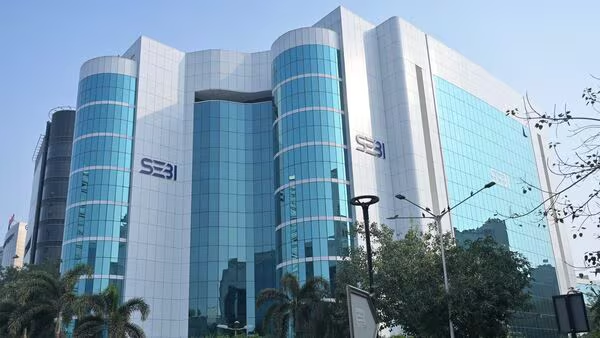


In a decisive bid to clear the single biggest regulatory hurdle blocking its stock market debut, the National Stock Exchange of India (NSE) formally filed to settle its long-running co-location and dark-fibre disputes with SEBI.
The initial consent proposal offered ₹1,388 crore (~$166 million) under SEBI’s regulatory settlement mechanism, allowing the country’s largest bourse to resolve the high-profile enforcement cases “without admitting or denying” any legal guilt or operational wrongdoing.
Following intense negotiations, a SEBI-appointed High-Powered Expert Committee—chaired by former Calcutta High Court Chief Justice Jai Narayan Patel—cleared the settlement roadmap, with the ultimate calculated payout settling closer to ₹1,800 crore to fully account for accumulated interest penalties.
Anatomy of the Double Dispute
The legal cloud over the NSE dates back over a decade and stems from two interconnected structural gaps discovered inside its trading infrastructure:
- The Co-Location Scandal (₹1,165 Crore Core Offer): Stemming from a 2015 whistleblower tip, SEBI investigated allegations that a select group of algorithmic brokers received preferential, high-speed access to the exchange’s trading architecture. Loopholes in the NSE’s initial “tick-by-tick” data sequence allegedly allowed specific brokers to log into backup servers earlier than others, creating an unfair split-second latency advantage.
- The Dark Fibre Controversy (₹223 Crore Core Offer): Regulators flagged that in 2015, the NSE permitted a telecom vendor to deploy unauthorized dark-fibre lines connecting specific brokerage offices directly to the exchange’s data centers. The setup bypassed standard vendor vetting and telecom licensing regulations, giving those firms an uneven processing edge over competitors.
The Ultimate Prize: Paving the Way for India’s Biggest IPO
The massive financial payout—easily the largest single consent settlement in SEBI’s history—was an essential corporate maneuver designed to secure a regulatory No-Objection Certificate (NOC) for the exchange’s long-stalled listing plans.
Following “in-principle” clearances from SEBI’s internal panels and top leadership, the final procedural hurdle moved to the Supreme Court. Because SEBI had previously appealed an intermediate tribunal order to the apex court, the final terms of the multi-crore settlement must be judicially recorded by the court to formally close out the active enforcement docket.
With the settlement architecture firmly locked in place, the path was cleared for the exchange to finally advance its commercial ambitions. The NSE officially filed its ₹30,000 crore Draft Red Herring Prospectus (DRHP) with SEBI.
The public issue will be structured entirely as an Offer for Sale (OFS) of 14.89 crore shares, with institutional legacy backers like the State Bank of India (SBI) and Morgan Stanley liquidating a combined 6% stake. Valued at over ₹5 lakh crore in the unlisted gray market, the mega-offering is officially on track to eclipse the previous record held by Hyundai Motor India’s 2024 debut to become the largest initial public offering in Indian history.