

In a bid to diversify its backend hardware and rein in staggering operational costs, Anthropic is in advanced talks with Microsoft to rent Azure servers powered by Microsoft’s custom-built Maia 200 AI chips.
The negotiations mark a major commercial pivot. If the deal closes, Anthropic will become the first major external frontier AI lab to deploy Microsoft’s in-house silicon, giving Microsoft a high-profile validation win as it fights to catch up to the custom-chip ecosystems of Amazon (Trainium) and Google (TPU).
1. The Financial & Cloud Architecture Interlock
The chip negotiations do not represent a brand-new corporate marriage; instead, they deeply layer into a massive, pre-existing multi-year alliance between the two tech giants.
- The Sizable Commitments: The infrastructure talks build directly upon a $5 billion investment Microsoft committed to Anthropic. In a reciprocal architecture play, Anthropic pledged to route a staggering $30 billion in cloud spending directly to Microsoft Azure over the life of the agreement.
- The Cloud Trio Completion: Anthropic is executing an aggressive “cloud-agnostic” approach to protect its compute access. By adding Azure’s Maia 200 to its active roster, Anthropic achieves a clean sweep of the big three cloud hyperscalers—already utilizing Amazon’s Trainium (under a $100 billion, 10-year pact) and Google’s Tensor Processing Units (TPUs) alongside its baseline Nvidia GPU footprint.
2. The Core Driver: The Aggressive Cost of Agentic AI
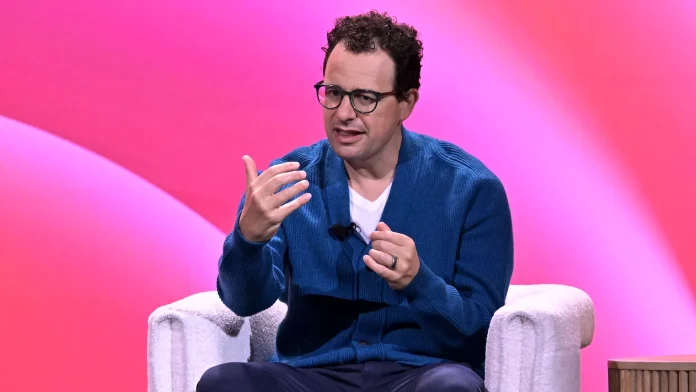
The primary catalyst driving Anthropic to explore alternative silicon architectures is a widening infrastructure strain. At an industry event earlier this month, Anthropic co-founder and CEO Dario Amodei openly admitted the company has faced intense “difficulties with compute.”
The explosive global popularity of the Claude chatbot ecosystem and, more notably, its heavy-duty Claude Code autonomous programming assistant, have driven server utilization and API token costs to unsustainable thresholds.
The Cost Warning: The severe economic weight of open-ended AI agents was highlighted when reports surfaced that Uber accidentally exhausted its entire calculated 2026 AI software budget by April alone, due to 5,000 internal engineers aggressively running Claude Code loops. Ironically, even Microsoft’s internal Experiences + Devices team is reportedly winding down its internal employee Claude Code licenses to rein in operating expenses before the new fiscal year begins in July.
3. The Hardware Profile: Microsoft Maia 200
By shifting specific workloads off premium Nvidia GPUs and onto Microsoft’s custom-built, second-generation accelerator, Anthropic is targeting structural margin relief.
- Silicon Specifications: Fabricated on TSMC’s cutting-edge 3-nanometer process, each Maia 200 chip houses over 140 billion transistors. It is explicitly architected to maximize efficiency across low-precision inference math, pushing over 10 petaFLOPS of 4-bit (FP4) and 5 petaFLOPS of 8-bit (FP8) performance inside a 750W thermal envelope.
- The “Tokens-per-Dollar” Moat: During an April earnings call, Microsoft CEO Satya Nadella confirmed that the operational Maia 200 clusters running in Arizona and Iowa yield over a 30% improvement in tokens-per-dollar compared to the legacy commercial silicon in Azure’s fleet today.
- Memory Depth: To prevent the massive context windows of models like Claude from bottlenecking, Maia 200 relies on an ultra-wide memory sub-system utilizing 216GB of high-bandwidth HBM3e memory pumping data at 7 TB/s.
4. Strategic Implications for the Market
For Microsoft, securing Anthropic is a major validation milestone. Up until this point, the Maia platform was predominantly viewed as an internal cost-cutting measure designed to power Microsoft 365 Copilot and host specific OpenAI GPT-5.2 models.
By proving that a frontier competitor like Anthropic can run massive, long-context engineering workloads seamlessly on its first-party hardware, Microsoft establishes itself as a standalone contender in the custom AI chip race while mitigating its long-term financial exposure to Nvidia supply line premium pricing.